
Tearing down damaged drywall or scraping decades of peeling paint is the fastest way to blow your home renovation budget. For old home renovators and DIY enthusiasts, traditional wall restoration means days of messy mudding, endless sanding, and premium contractor fees. You can bypass this exhausting demolition phase entirely by changing your approach from wall repair to strategic coverage. This technical guide reveals how premium decorative composite siding acts as a structural shield, instantly turning wave-patterned framing and crumbling plaster into flawless, architect-grade surfaces. You will learn the exact mechanics of dry-installation coverage, how to hide framing flaws, and how to pick stable materials that never warp in humid environments.
Table of Contents
Why Traditional Drywall Repair Fails Old Home Renovators
Many homeowners assume that a fresh coat of premium paint can rescue a room with old, damaged walls. However, applying glossy paint over uneven plaster, settling cracks, or remnants of old wallpaper glue actually highlights those structural imperfections. Fixing these deep surface flaws through traditional methods requires a labor-intensive process known as skim coating, which demands multiple layers of joint compound and hours of dusty sanding.
For historical properties and aging family homes, this wet plastering method introduces significant structural and logistical headaches. Old wall framing shifts over time, which means fresh patches of joint compound often crack along the same vintage stress lines within just a few months. Choosing high-durability decorative composite siding offers a smart, dry-installation alternative that completely skips the messy demolition phase.
Instead of wasting time trying to patch a failing base layer, you can use high-density composite tongue-and-groove profiles to bridge right over surface valleys and stubborn depressions. This installation approach creates an entirely new, stable wall surface while leaving the old, damaged substrate hidden safely behind it. By eliminating wet mudding phases, home renovators can shave days off their project timelines while preventing fine drywall dust from settling inside their living spaces. Utilizing decorative composite siding turns a week-long repair headache into a predictable, clean upgrade.
How to Hide Wall Imperfections with Decorative Composite Panels Successfully
The secret behind hiding waves and bows in old framing lies in the physical rigidity of the material you choose. Low-cost, thin plastic coverings or flimsy panel materials simply conform to the shape of the warped studs beneath them, copying the exact wall waves you want to hide. When learning how to hide wall imperfections with decorative composite planks, you must rely on the material’s internal structural stiffness to flatten out spatial variations. Heavy-duty decorative composite siding blends do not flex into deep wall hollows; instead, they span across low spots to establish a perfectly straight, flat finish line.
To achieve a flawless, professional look over highly irregular surfaces, smart builders often combine high-density panels with a simple furring strip grid. This mechanical mounting strategy delivers immediate benefits for challenging interior renovations:
- Bypasses Deep Surface Damage: Panels bridge directly over missing chunks of plaster or old holes without needing structural backing patches.
- Isolates Active Peeling Paint: Traps old, flaking paint layers safely behind a solid barrier, removing the need for intense chemical stripping.
- Creates Flat Framing Lines: Shimming out low points on your furring strips creates an engineered grid that keeps the entire accent wall plumb and level.
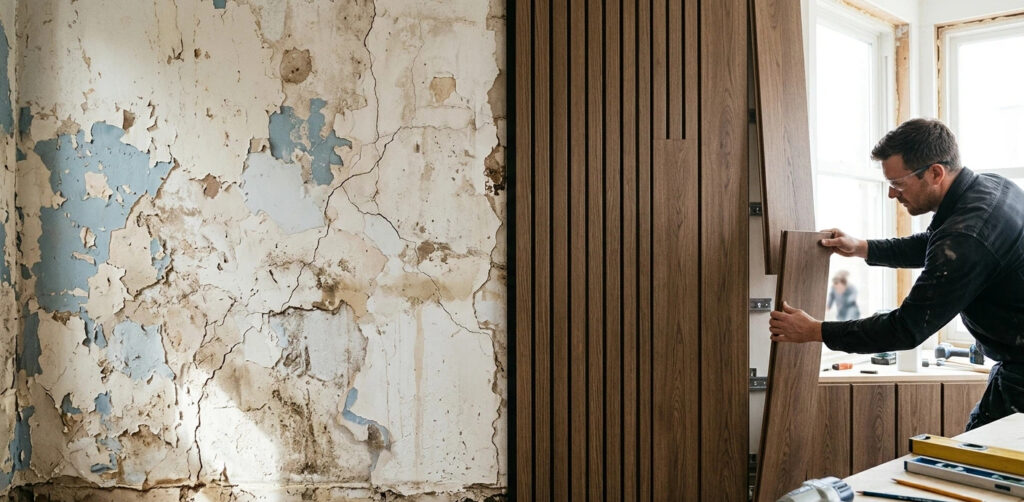
For major home design projects, you can explore the precise structural dimensions and heavy-duty profiles required for these transformations by reviewing the engineered decorative composite siding options on the LyPanel Architectural Products Catalog. Incorporating this engineered decorative composite siding system ensures your new wall surface stays straight, rigid, and beautiful for decades.
Upgrading Interior Spaces with Decorative Composite Siding and Wood Slat Kits
While traditional solid wood accents offer a classic look, real timber reacts constantly to shifting temperature and moisture levels inside a home. Installing solid wood millwork over damp basement brickwork or near seasonal fireplaces frequently leads to wood checking, splitting, and cupping. Over time, these material movements can pull mounting screws loose and ruin neat corner joints. Integrating engineered indoor wood slat wall kits made from premium decorative composite siding substrates solves these environmental movement issues completely.
Modern composite technology blends natural wood fibers with stable polymers, delivering the warm visual appeal of natural hardwood without its physical vulnerabilities. To see how these polymer-blend decorative composite siding systems handle environmental stress, engineers measure material performance using established testing criteria like ASTM D7032: Standard Specification for Establishing Performance Ratings for Wood-Plastic Composite Products.
This international standard ensures your architectural wall accents resist moisture absorption and maintain their shape when indoor humidity levels swing between winter and summer. Furthermore, these high-end interior kits utilize specialized decorative composite siding technology to provide pre-spaced, uniform vertical channels that create deep shadow lines. These dark shadows draw the eye along vertical paths, making low ceilings feel taller while easily masking any minor alignment shifts in the old house framing underneath.
Fixing Damaged Plaster Walls with Decorative Composite Siding Arrays
Transforming an old, damaged wall into a sleek architectural feature is a highly manageable weekend project for any DIY fan. By choosing a high-density decorative composite siding system, you save hours of prep work while ensuring a clean, dust-free installation process. Before mounting your decorative composite siding panels, follow this straightforward verification checklist to ensure your base wall is stable and ready for coverage:
1.Knock Away Loose Debris: Use a stiff putty knife to scrape down large, loose paint flakes or crumbling plaster chunks so the wall is reasonably flat.
2.Locate Internal Wall Studs: Use a reliable electronic stud finder to locate and mark your vertical framing lines through the existing old drywall.
3.Check for Flatness: Hold a long, straight spirit level against the wall to find severe high spots that might need a quick sanding before installation.
4.Apply Construction Adhesive: Run thick, zig-zag lines of high-tack adhesive along the back of each tongue-and-groove decorative composite siding panel for maximum hold.
For those managing larger renovations, it is wise to consult the safety and building guidelines in the International Residential Code (IRC) for Interior Finishes. This reference guide ensures your new decorative composite siding accent walls meet required flame-spread indexes and smoke-development standards for residential spaces.
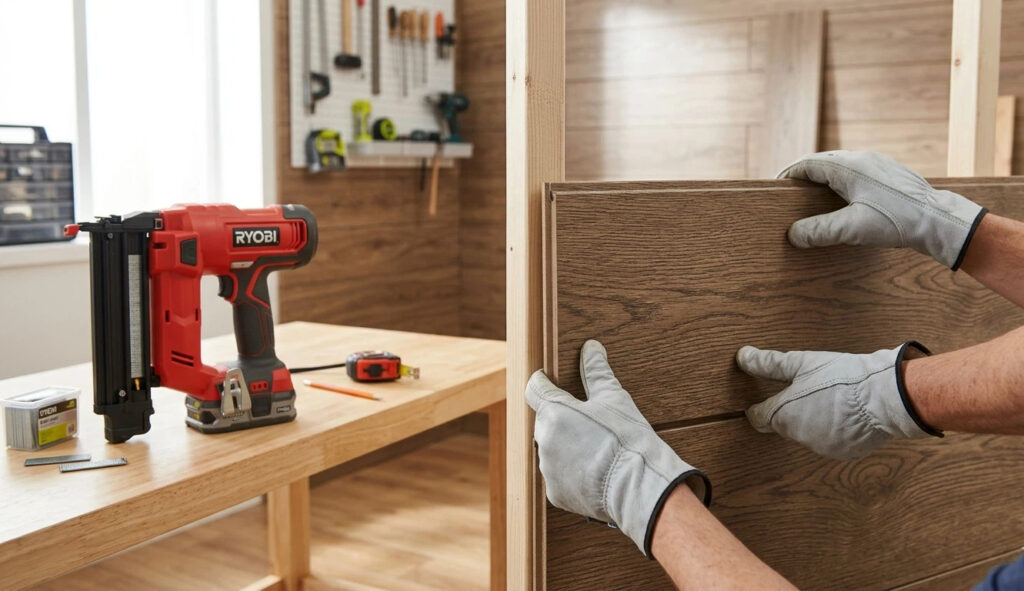
Once your base checks are done, secure the decorative composite siding panels by driving brad nails through the hidden mounting flanges directly into the studs. The interlocking tongue-and-groove edges automatically hide all your mechanical fasteners, creating a clean, seamless surface across the entire wall.
conclusion
Rescuing an old room from damaged surfaces does not have to mean spending a fortune on messy demolition and tedious drywall patching. Choosing cheap patchwork fixes often just hides deep structural issues that will show through your paint again during the next seasonal shift. By upgrading to an engineered interior wall system, you can bridge right over old surface flaws while adding a beautiful, textured element to your home.
Focusing your remodeling budget on durable, stable materials ensures your home update looks great for years to come. Investing in high-performance decorative composite siding allows you to skip the stress of traditional wall repair, helping you complete your room renovation on time and enjoy a beautiful, professional finish.
Ready to stop sanding old plaster and give your home a premium, modern update? Explore the full range of colors and durable textures by visiting the Decorative Materials Collection, select the perfect style for your room, and download our complete installation guide to start your hassle-free decorative composite siding project today.
FAQ
Can you install premium decorative composite siding directly over highly textured plaster walls?
Yes. If the texture varies by less than a quarter-inch, you can apply heavy-duty construction adhesive along with mechanical brad nails to mount the panels directly over the texture. For rougher, deeply troweled walls, installing thin wood furring strips first ensures a perfectly flat mounting plane.
How do indoor wood slat wall kits handle wall dampness in older basements?
Unlike real wood slats that trap moisture and encourage mold growth, high-quality composite slat kits use non-porous polymer backings. This material blend prevents moisture absorption, ensuring your accent walls stay straight and mold-free in below-grade rooms.
Do composite panel systems require special tools for cutting and trimming around electrical outlets?
Not at all. High-density composite materials cut cleanly using standard woodworking tools. You can make long rip cuts with a traditional table saw, and cut precise openings for electrical boxes using a standard hand jigsaw with a fine-tooth wood blade.