
Architectural Wall Solutions are no longer just about covering blank walls. In modern offices, walls affect how a room looks, sounds, and feels during everyday work.
Open offices, glass meeting rooms, hard floors, and minimalist interiors often create one common problem: too much echo. This guide explains how Architectural Wall Solutions can help reduce harsh sound reflections while adding visual depth, texture, and a more polished workplace identity.
Table of Contents
Why Modern Offices Need Architectural Wall Solutions
A plain wall may look clean in a rendering, but in a real office, it can make a room feel cold, noisy, and unfinished. Sound reflects from hard surfaces such as glass, concrete, painted drywall, tile, and large tables. When too many reflective surfaces exist together, speech becomes less clear and background noise feels more tiring.
Architectural Wall Solutions help address this issue by adding surface depth, layered materials, and visual rhythm to the room. They are not always the same as professional acoustic panels, but they can support acoustic comfort by reducing the amount of flat, hard wall area in a space.
How Architectural Wall Solutions Improve Room Acoustics
Architectural Wall Solutions improve office comfort by changing the way sound interacts with the wall surface. A completely flat wall sends sound reflections back into the room more directly. A textured or layered wall surface can help soften that hard reflection and create a less sharp acoustic experience.
The improvement usually comes from three factors:
- Thickness: A thicker wall system creates more physical depth than paint or wallpaper.
- Surface structure: Grooves, ridges, or layered profiles can break up direct reflections.
- Material choice: Softer or composite surfaces can reduce the harsh feel of reflected sound.
This does not mean every decorative wall panel becomes a professional sound absorber. The safer and more accurate claim is that good wall design can help reduce echo, improve speech comfort, and make the room feel calmer.
Acoustical Surfaces explains the difference between soundproofing and sound absorption: soundproofing blocks transmission, while sound absorption improves the acoustic quality inside a room by reducing echo and reverberation. That distinction is important for avoiding exaggerated promises.
Acoustic Slat Wood Alternative for Office Walls
Traditional wood slat acoustic panels are popular because they combine warmth, rhythm, and sound-friendly texture. But not every office wants the same slatted wood look. Some spaces need cleaner lines, lighter materials, different colors, or a more customized architectural finish.
That is where an Acoustic slat wood alternative becomes useful. It can offer a similar sense of depth and texture while giving designers more freedom in color, profile, panel size, and installation style.
Architectural Wall Solutions can be used as a wood slat wall alternative when the goal is not only sound treatment, but also brand image, wall protection, and a more refined commercial interior. For example, a reception area may need a strong visual identity, while a meeting room may need a calmer sound environment. A flexible wall system can support both goals.
How to Reduce Echo in Office Meeting Rooms
Meeting rooms are one of the most common places where echo becomes obvious. People speak across a table, voices bounce from glass walls, and video calls make poor acoustics even more noticeable.
Architectural Wall Solutions can help reduce this problem when they are placed on the right surfaces. The most useful wall areas are usually opposite or adjacent to major sound sources, such as the wall behind the screen, side walls near the table, or large blank walls facing glass partitions.
A practical office meeting room strategy includes:
1.Reduce large untreated wall surfaces.
2.Add textured or layered wall panels.
3.Avoid too many hard finishes in one room.
4.Combine wall treatment with carpet, fabric seating, curtains, or ceiling elements.
5.Test the room with real speech, not only visual inspection.
Wall Thickness and Surface Structure Matter More Than You Think
Many buyers focus only on panel color, but thickness and surface structure can have a strong effect on how the wall performs visually and acoustically.
A thin, flat decorative sheet may improve appearance, but it may not change the room atmosphere very much. A deeper wall structure can create shadow, rhythm, and a more architectural look. It may also help soften reflections better than a completely flat surface.
This is the key behind Enhancing room acoustics and style with architectural wall solutions. The wall does not need to become a studio-grade acoustic treatment to make a difference. In offices, even moderate improvements in echo control can make meetings feel more natural and reduce the sense of noise fatigue.
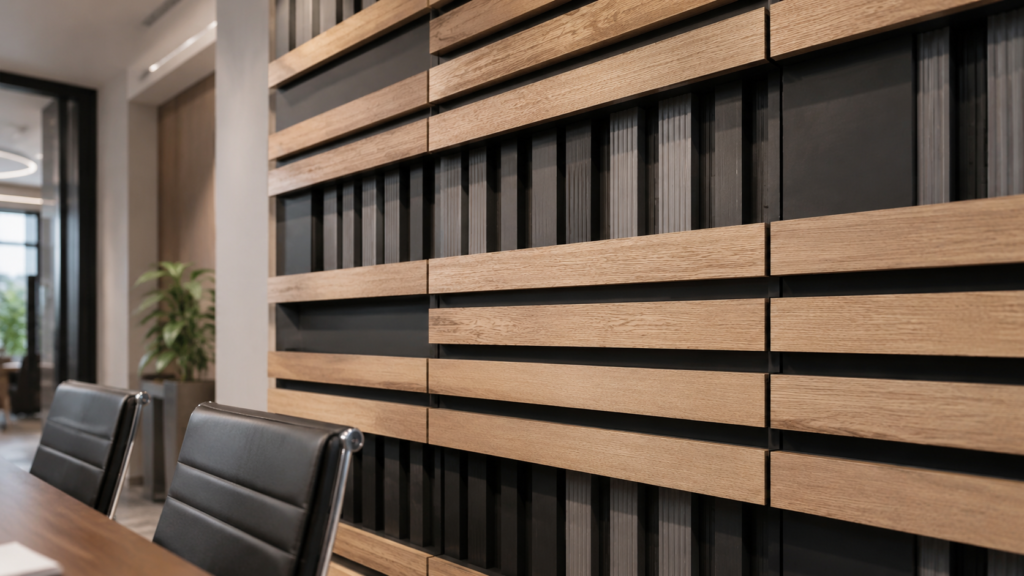
Where Architectural Wall Solutions Work Best in Commercial Interiors
Architectural Wall Solutions are most effective when used in spaces where people talk, gather, focus, or form first impressions.
The best office areas include:
- Conference rooms: Help reduce echo and improve conversation comfort.
- Reception areas: Create a stronger first impression with texture and depth.
- Open offices: Reduce the cold feeling of flat, hard walls.
- Executive offices: Add warmth, privacy, and a more premium atmosphere.
- Training rooms: Support clearer speech during presentations.
- Lounge spaces: Create a softer, more relaxed environment.
- Corridors: Break up long, hard reflective surfaces.
The goal is not to cover every wall. A more professional approach is to identify the most reflective or visually important surfaces and use wall panels where they have the greatest effect.
Choosing the Right Wall Solution for Sound and Style
Before selecting any product, define the room problem clearly. Is the room too echoey? Does it look too plain? Does the design need a warmer surface? Is the goal to replace acoustic slat wood with something more flexible?
Architectural Wall Solutions should be selected based on:
- Room size
- Wall area
- Ceiling height
- Existing hard surfaces
- Noise source
- Desired style
- Material thickness
- Surface texture
- Installation method
- Cleaning and maintenance needs
A good office wall solution should not feel like an afterthought. It should work with lighting, furniture, flooring, ceilings, and brand identity. In high-end office design, the wall is often the element that connects sound comfort and visual quality.
Common Mistakes When Choosing Office Wall Panels
One mistake is choosing only by appearance. A panel may look impressive in a showroom but fail to solve the room’s comfort problem.
Another mistake is assuming that any thick wall panel is automatically acoustic. Real acoustic performance depends on material, structure, mounting, surface area, and the overall room condition.
Avoid these mistakes:
- Using panels only on decorative walls, not reflective walls.
- Ignoring glass partitions and hard floors.
- Choosing very glossy finishes in already echoey rooms
- Forgetting conference call audio quality.
- Treating acoustic comfort and interior design as separate decisions.
- Assuming one product can solve every noise problem.
Architectural Wall Solutions work best when they are part of a complete room strategy, not a last-minute decoration.
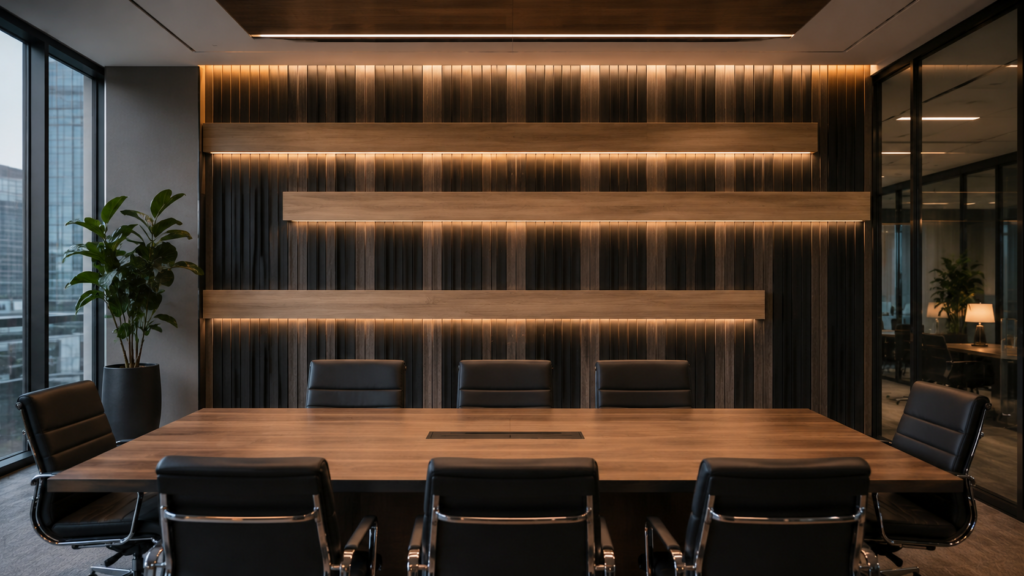
Conclusion
Architectural Wall Solutions give modern offices a way to improve both sound comfort and visual quality without relying only on traditional acoustic panels. For meeting rooms, reception areas, open offices, and executive spaces, the right wall thickness, texture, and material structure can help reduce echo while creating a more polished interior.
FAQ
What are Architectural Wall Solutions?
Architectural Wall Solutions are decorative and functional wall systems used to improve interior appearance, wall structure, and comfort in offices, commercial spaces, and modern interiors.
Can Architectural Wall Solutions reduce office echo?
Yes. Architectural Wall Solutions can help reduce harsh reflections and improve acoustic comfort, especially when they include thickness, texture, or layered surface structure.
Are Architectural Wall Solutions the same as acoustic panels?
Not always. Acoustic panels are designed mainly for sound absorption, while Architectural Wall Solutions balance design, surface structure, and everyday interior comfort.
What is an Acoustic slat wood alternative?
An Acoustic slat wood alternative is a wall solution that offers a similar textured or warm design effect to slat wood panels, often with more flexible colors, materials, and profiles.