
The definition of “luxury” in high-end interior design has undergone a radical transformation. A decade ago, luxury was defined by the rarity of exotic hardwoods or the sheer cost of imported stone. Today, the most sophisticated clients—architects, developers, and homeowners alike—prioritize a different metric: the health of their indoor environment and the ethical footprint of their materials. As we spend nearly 90% of our time indoors, the demand for Sustainable Wall Decor has moved from a niche environmental preference to a fundamental requirement for modern living.
The shift is driven by a growing awareness of the “invisible killers” in traditional construction: volatile organic compounds (VOCs) and formaldehyde. In this guide, we will analyze why moving toward engineered alternatives is not a compromise on aesthetics, but an upgrade in structural performance and biological safety.
Table of Contents
How Sustainable Wall Decor Prevents Formaldehyde Off-gassing
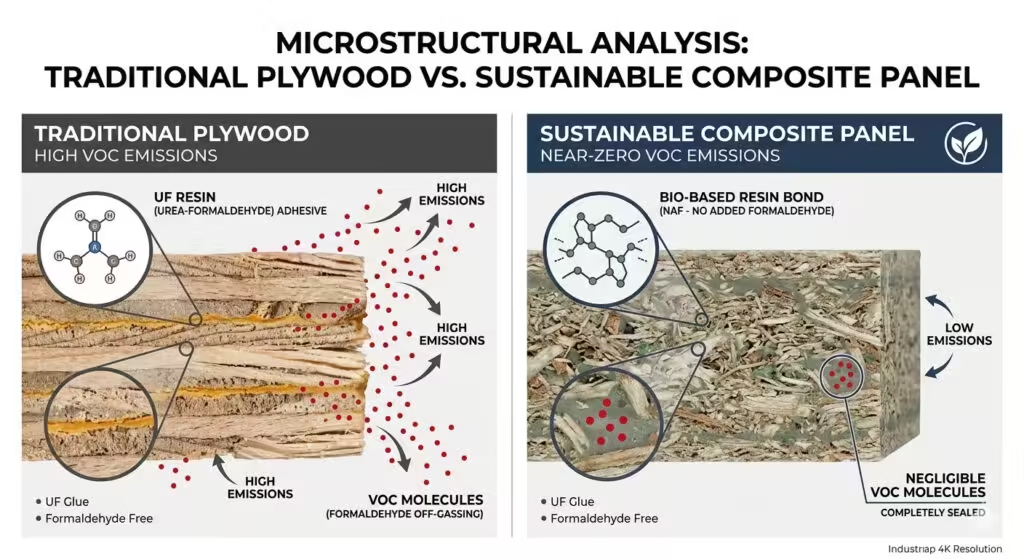
The primary concern in contemporary interior fit-outs is Indoor Air Quality (IAQ). Traditional wall treatments—such as low-grade plywood, certain wallpapers, and standard adhesives—often utilize urea-formaldehyde (UF) resins. These resins are notorious for “off-gassing,” a process where toxic chemicals are released into the air over several years, potentially leading to respiratory issues and long-term health risks.
Choosing Sustainable Wall Decor is the most effective strategy to mitigate these risks. Modern sustainable solutions utilize phenol-formaldehyde (PF) or, more increasingly, bio-based soy resins that emit little to no VOCs. According to the United States Environmental Protection Agency (EPA), managing source materials is the single most effective way to reduce indoor pollutants.
By integrating Sustainable Wall Decor that meets the California Air Resources Board (CARB) Phase 2 or the European E0 standards, designers can create spaces that are as safe as they are beautiful. This isn’t just about “being green”; it is about protecting the respiratory health of the inhabitants through deliberate material selection.
Why composite materials are the best choice for green building
When evaluating the environmental impact of a project, architects look at the Life Cycle Analysis (LCA)—the total carbon footprint from extraction to disposal. This is exactly Why composite materials are the best choice for green building. Unlike solid timber, which requires the harvesting of slow-growing old-growth forests, composite materials utilize a “circular” approach.
Most high-performance composites are manufactured from post-consumer recycled content, such as reclaimed wood fibers or industrial by-products that would otherwise end up in landfills. This resource efficiency significantly lowers the “embodied carbon” of a building. Research published by the International Organization for Standardization (ISO 14040/44) highlights that materials with high recycled content and long durability are essential for meeting global ESG targets.
Furthermore, Why composite materials are the best choice for green building becomes evident in their longevity. A solid wood panel may warp, crack, or fall victim to termites over time, requiring replacement. An engineered composite, however, is designed for dimensional stability, meaning it lasts decades longer with zero maintenance, further reducing the project’s long-term environmental toll.
Engineering High-Performance Eco-friendly composite paneling
The technology behind Eco-friendly composite paneling has advanced to a point where it can outperform natural materials in almost every technical category. Today’s sustainable panels are often composed of a sophisticated matrix of natural fibers and recycled polymers. This engineering allows for a high degree of customization in terms of fire rating, acoustic absorption, and moisture resistance.
For instance, many Sustainable Wall Decor options now incorporate acoustic backing made from recycled PET (plastic bottles). This not only diverts waste from the ocean but also provides a Noise Reduction Coefficient (NRC) that natural wood simply cannot match. In high-end residential theaters or commercial boardrooms, this dual-functionality—aesthetic beauty plus acoustic performance—makes it an indispensable asset.
When specifying Eco-friendly composite paneling, it is important to look at the manufacturing process. The best producers use a “closed-loop” water system and renewable energy to power their factories. This ensures that the “luxury” of the product isn’t just surface-level, but baked into every layer of its production.
Which Sustainable Wall Decor Profile Suits Your Project?
There is no “one-size-fits-all” solution in sustainable design. The key to a successful project is matching the specific properties of the Sustainable Wall Decor to the environment in which it will live.
| Application Environment | Recommended Material Profile | Core Benefit |
| High-Humidity (Kitchens/Spas) | Stone-plastic composites (SPC) or bamboo-based panels. | Zero swelling and high mold resistance. |
| High-Traffic (Lobbies/Halls) | High-density Eco-friendly composite paneling. | Impact resistance and scratch-proof surfaces. |
| Acoustic-Critical (Offices) | Recycled PET felt with wood slat overlays. | Superior sound dampening and NRC ratings. |
| Luxury Living Rooms | Natural wood veneers on low-emission MDF cores. | Authentic tactile feel with 70% less wood use. |
For a high-end residential project, you might prioritize Sustainable Wall Decor with a natural walnut veneer, which uses a fraction of the timber required for solid planks. Conversely, for a commercial green building, the focus might be on Eco-friendly composite paneling that contributes the maximum number of points toward LEED v4.1 certification.
Validating the ESG Standards of Sustainable Wall Decor
To ensure your Sustainable Wall Decor is truly as “eco-friendly” as the marketing suggests, you must look for third-party verification. The world of greenwashing is vast, but authoritative certifications provide a clear roadmap for procurement.
1.FSC (Forest Stewardship Council): Ensures that any wood fiber used in your Sustainable Wall Decor comes from responsibly managed forests.
2.GREENGUARD Gold: This is the “gold standard” for IAQ. It ensures that the product has been tested for over 10,000 chemicals and meets the world’s most stringent VOC emission standards.
3.Cradle to Cradle (C2C): A rigorous framework that assesses a product’s safety for humans and the environment and its design for future life cycles.
Specifying Sustainable Wall Decor with these certifications is the only way to guarantee that your ESG values are reflected in the physical reality of the building.
The Strategic Choice for a Healthier Future
Choosing Sustainable Wall Decor is no longer just an environmental statement; it is a strategic investment in human health and property value. By understanding the technical nuances—from VOC off-gassing to the lifecycle benefits of Why composite materials are the best choice for green building—designers can move beyond surface-level aesthetics.
Whether you are seeking the tactile warmth of a master bedroom or the rugged durability of a commercial corridor, there is an Eco-friendly composite paneling solution that fits your specific needs. True luxury isn’t found in the exploitation of resources, but in the intelligent engineering of a space that breathes, lasts, and protects.
FAQ
Does Sustainable Wall Decor cost more than traditional options?
While the initial purchase price can be 10-15% higher, the total cost of ownership is often lower. Because Eco-friendly composite paneling is more durable and requires no staining or sealing, you save on maintenance and replacement costs over the building’s life.
Is it true that Sustainable Wall Decor helps with insulation?
Yes. Many types of Eco-friendly composite paneling have higher thermal resistance (R-values) than traditional drywall or thin wood paneling, helping to maintain indoor temperatures and reduce energy bills.