
Polyester acoustic panels are often chosen when a room needs better sound comfort without turning the interior into a technical-looking studio. For buyers, the question is not only whether the panel absorbs sound. It is whether PET fiber panels fit the project’s design, safety, installation, sustainability, and long-term use requirements.
This guide explains what PET acoustic panels are, where they work best, what specifications matter, and what buyers should check before ordering panels for offices, restaurants, meeting rooms, schools, hotels, and modern commercial interiors.
Table of Contents
What Are Polyester Acoustic Panels Made Of?
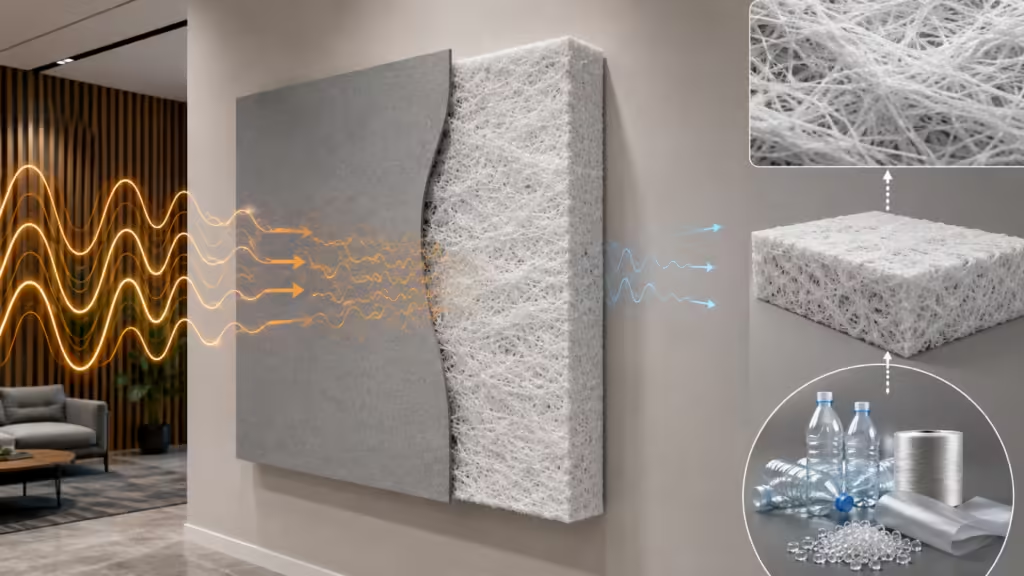
Polyester acoustic panels are sound absorbing panels usually made from compressed PET fiber. PET stands for polyethylene terephthalate, a polyester material widely used in fibers, films, and packaging. In acoustic panels, PET fiber is formed into a porous board that helps reduce sound reflection inside a room.
The key word is “absorb.” These panels help control echo and reverberation, but they are not the same as full soundproofing materials. ASTM’s C423 standard explains that sound absorption is measured in a reverberation room by measuring sound decay rate, which is why buyers should ask for acoustic test data instead of judging panels by appearance only.
Why PET Fiber Panels Fit Modern Interior Projects
PET acoustic panels are popular because they solve two problems at the same time: room noise and interior appearance.
Older acoustic materials often looked industrial or hidden behind fabric systems. Polyester fiber panels can be cut, colored, shaped, grooved, or arranged as decorative acoustic wall panels. That makes them easier to use in offices, restaurants, schools, hotels, retail stores, and public areas where design matters.
For projects where acoustic treatment must blend with furniture, lighting, flooring, and brand colors, this guide on acoustic panels for modern interiors can be used as a supporting internal resource.
Sound Absorption Without Making the Room Look Like a Studio
Many buyers want less echo, but they do not want the room to look like a recording booth. This is where polyester acoustic panels work well.
They can be used as wall panels, ceiling clouds, desk dividers, hanging baffles, and decorative background walls. In meeting rooms, they can improve speech comfort. In restaurants, they can reduce harsh reflections from glass, tile, concrete, and metal surfaces. In offices, they can reduce the hard-surface sound build-up that makes conversations feel distracting.
The Acoustical Society of America’s Classroom Acoustics for Architects guide notes that rooms with hard, reflecting surfaces become more reverberant and allow sound levels to build up due to reflections. That same principle applies to many commercial interiors with hard finishes.

Eco Friendly Acoustic Panels: What Recycled PET Really Means
Eco friendly acoustic panels are a major reason buyers consider PET acoustic panels. Many products can use recycled PET fiber, and that can support more responsible interior material selection.
The U.S. EPA’s plastics material data shows that PET bottles and jars were recycled at a rate of 29.1% in 2018. This does not mean every PET panel is automatically sustainable. It means buyers should ask about recycled content, recyclability, factory documentation, and whether the claim is supported by test reports or supplier records.
Good wording matters. It is safer to say recycled PET acoustic panels can support more sustainable interior choices, rather than claiming every product is “100% green.”
Lightweight Polyester Fiber Panels Make Wall Installation Easier
Polyester fiber panels are usually lightweight compared with many rigid interior materials. That helps installers handle wall panels, ceiling panels, custom shapes, and renovation projects more easily.
For polyester fiber acoustic panels for walls, buyers should check panel thickness, density, fixing method, edge finish, and whether the wall surface can support the selected installation method. Lightweight does not mean “no planning needed.” It means installation can be simpler when the panel, adhesive, hardware, and wall condition are matched correctly.
Polyester Acoustic Panels Absorb Sound, But They Do Not Fully Soundproof a Room
One common buying mistake is confusing sound absorption with soundproofing.
Absorption improves the sound inside a room by reducing reflections. Soundproofing reduces sound transfer between rooms by using mass, sealing, isolation, and construction layers.
Polyester acoustic panels are mainly used for absorption. They can make a room feel calmer and less echo-heavy, but they will not fully stop noise from passing through walls, doors, windows, or ceilings. If the project goal is privacy between rooms, buyers may need wall construction upgrades, door seals, acoustic insulation, or other sound isolation methods.
PET Acoustic Panels for Interior Spaces: Where They Work Best
PET acoustic panels for interior spaces are useful when the room has too many hard surfaces and not enough absorption.
| Interior Space | Why PET Panels Work |
|---|---|
| Meeting rooms | Reduce echo and improve speech clarity |
| Restaurants | Lower dining noise and improve comfort |
| Offices | Control open-space sound reflection |
| Schools | Support clearer listening conditions |
| Hotels | Add acoustic comfort with design value |
| Corridors | Reduce hard-surface sound reflection |
| Retail spaces | Improve customer experience |
| Studios | Support cleaner sound control |
For meeting rooms, this internal article explains how acoustic panels for meeting rooms support speech clarity.
For dining spaces, this acoustic panels for restaurants guide is a useful next step.
PET Panels vs Foam PanelsPET
Foam panels still have a place, especially in studios, home recording rooms, and small rooms where appearance is less important. But polyester acoustic panels are often preferred in commercial interiors because they look cleaner and usually provide more design flexibility.
| Factor | Polyester Acoustic Panels | Foam Panels |
|---|---|---|
| Appearance | More interior-friendly | More studio-like |
| Durability | Usually firmer surface | Softer and easier to damage |
| Application | Offices, restaurants, commercial interiors | Studios and small rooms |
| Sustainability | Can use recycled PET fiber | Depends on foam type |
| Design options | Colors, shapes, wall patterns | Usually more limited |
The better choice depends on the room, budget, appearance requirements, and acoustic goal.
What Buyers Should Check Before Choosing PET Acoustic Panels
Before buying polyester acoustic panels, buyers should ask for more than color samples.
Important checks include:
1.NRC or absorption test data
2.Panel thickness and density
3.Fire rating or surface burning classification
4.VOC or indoor air quality documentation
5.Recycled content information
6.Color options and edge finishing
7.Impact resistance for public spaces
8.Cleaning and maintenance method
9.Installation accessories
10.Custom size and shape capability
ASTM E84 is commonly used to evaluate the surface burning behavior of building materials used on exposed surfaces such as walls and ceilings. For indoor projects, EPA’s VOC guidance also reminds buyers that indoor organic chemical levels can be higher than outdoors, so low-emission material information is worth checking.
How to Choose Polyester Fiber Acoustic Panels for Walls
For wall applications, do not choose panels by color alone.
Start with the room problem. Is the issue speech echo, restaurant noise, open-office distraction, or decorative wall treatment? Then check how much wall coverage is needed, where panels should be placed, and whether the room has glass, concrete, tile, or other reflective surfaces.
For polyester fiber acoustic panels for walls, buyers should match:
- room function
- panel thickness
- color and shape
- wall mounting method
- fire and VOC requirements
- cleaning needs
- project budget
A decorative wall can still be functional if the acoustic layout is planned early.
Conclusion
Polyester acoustic panels are useful because modern interiors need more than visual design. They also need acoustic comfort, safe material choices, lighter installation, and surfaces that fit the space instead of looking like an afterthought.
For buyers comparing PET acoustic panels, the best choice is not simply the cheapest board. It is the panel that matches the room’s sound problem, design style, safety requirements, installation method, and long-term use.
FAQ
What are polyester acoustic panels?
Polyester acoustic panels are sound absorbing panels usually made from PET fiber. They are used on walls, ceilings, and interior surfaces to reduce echo and improve acoustic comfort.
Are PET acoustic panels eco friendly?
Many PET acoustic panels can be made with recycled PET fiber and may be recyclable. Buyers should check recycled content, certificates, and supplier documentation.
Are polyester acoustic panels good for walls?
Yes. Polyester fiber acoustic panels for walls are lightweight, decorative, and useful for reducing sound reflection in offices, meeting rooms, restaurants, and commercial interiors.
Do polyester acoustic panels block noise?
Not completely. They mainly absorb sound inside a room. Full soundproofing requires wall mass, sealing, isolation, and other construction methods.
Where can PET acoustic panels be used?
They can be used in meeting rooms, restaurants, offices, schools, hotels, corridors, studios, retail spaces, and modern interior projects.
Are polyester acoustic panels safe for interiors?
They can be suitable for interiors, but buyers should check fire rating, VOC information, material density, installation method, and local project requirements.
What should buyers check before ordering PET acoustic panels?
Buyers should check thickness, density, absorption data, fire rating, VOC documentation, recycled content, color options, installation method, and customization ability.