
Modern interiors are expected to do more than look good. Offices need clearer meetings, restaurants need better conversation comfort, studios need controlled reflections, and home theaters need a more focused listening experience. The challenge is that many people still think acoustic treatment means covering walls with unattractive foam or technical-looking materials.
That is where Acoustic Panels have changed the conversation. Today, they can support sound absorption while also becoming part of the room’s design language. This guide explains how to balance sound control, material choice, layout, color, and decorative value before choosing panels for a modern interior.
Table of Contents
Why Sound Control Now Matters in Interior Design
In offices, poor acoustics can make video calls and meetings tiring. In restaurants, too much reverberation makes conversation difficult. In apartments and home theaters, hard walls, glass, and open layouts can create echoes that reduce comfort.
Acoustic Panels help address this by absorbing part of the sound energy that would otherwise reflect across hard surfaces. For designers, the goal is not to make a room completely silent. The goal is to create a more controlled, comfortable, and visually coherent sound environment.
The Real Problem: Good-Looking Rooms Can Sound Bad
Many modern interiors use materials such as glass, concrete, metal, tile, and painted drywall. These finishes look clean and contemporary, but they often reflect sound. A beautiful room can feel noisy, harsh, or tiring if sound keeps bouncing between surfaces.
This is why decorative acoustic panels are useful. They give designers a way to add absorption without making the room look like a recording booth. Wood slat acoustic panels, polyester fiber acoustic panels, fabric-wrapped panels, and perforated panels can all support different visual styles.
Buyer Insight: When a room sounds uncomfortable, the problem is not always the sound source. Often, the surfaces are reflecting too much sound back into the space.
The key is to treat Acoustic Panels as both a performance material and a design element. If the panel looks disconnected from the interior style, users may reject it. If it looks good but absorbs poorly, the sound problem remains.
Acoustic Panels vs Soundproofing: Do Not Confuse Them
A common mistake is assuming acoustic panels are the same as soundproofing. They are not.
Soundproofing is about blocking sound from traveling between spaces. This usually involves wall assemblies, mass, sealing gaps, doors, windows, and structural details.
Acoustic Panels mainly improve sound inside a room by reducing reflections and reverberation. ASTM C423 measures sound absorption in a reverberation room by measuring decay rate, which is why tested absorption data matters when comparing acoustic materials.
So if a client wants to stop traffic noise from entering a room, wall construction matters. If the client wants a meeting room, restaurant, studio, or home theater to sound clearer inside, Acoustic Panels are often part of the solution.
Practical Value: What Acoustic Panels Improve
The value of interior acoustic panels is practical, not just decorative.
They can help:
- Reduce echo and reverberation
- Improve speech clarity
- Make meetings and calls easier to understand
- Improve restaurant conversation comfort
- Support better audio control in studios and home theaters
- Add wall texture and design depth
- Create visual zoning in open interiors
In commercial interiors, better acoustics may also improve user experience. A hotel lobby that feels calmer, a restaurant where people can talk comfortably, or an office where meetings are clearer can all create stronger long-term value.
Where Acoustic Panels Work Best in Modern Interiors
Acoustic Panels are not used the same way in every space. Placement and material choice should match the room’s function.
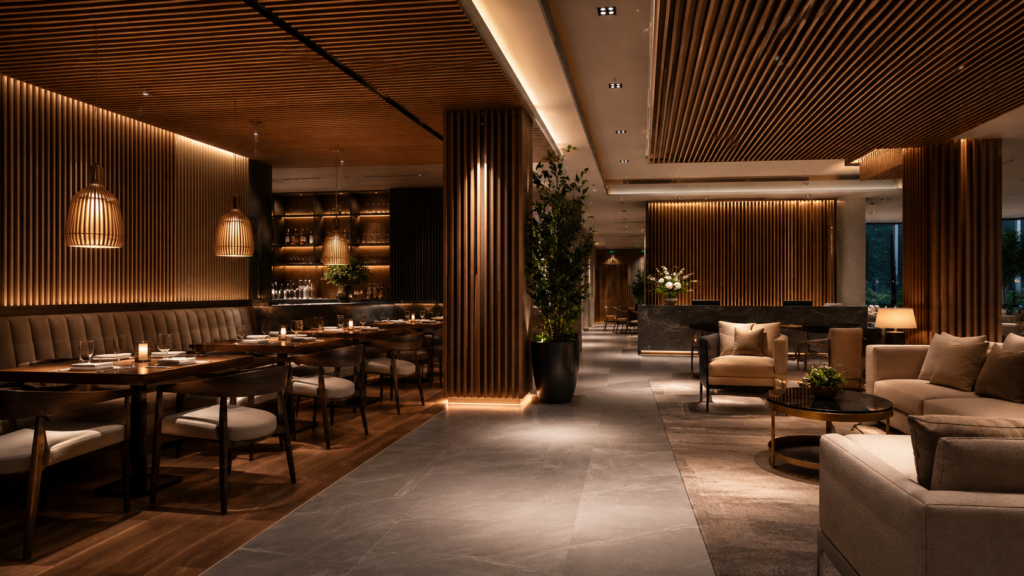
In restaurants and cafes, panels can reduce harsh reverberation while supporting brand atmosphere. Wood slat acoustic panels are popular here because they add warmth without looking too technical.
In home theaters, panels help control reflections and improve listening focus. They may be placed on side walls, rear walls, or ceiling zones depending on the room layout.
In studios, podcast rooms, and music rooms, acoustic treatment needs more careful planning. Absorption, diffusion, and bass control may all matter.
In hotels, libraries, classrooms, and wellness spaces, acoustic panels can support calmer environments where comfort and concentration matter.
How to Choose Acoustic Panels Without Sacrificing Style
The best acoustic solution starts with the room, not the panel catalog.
First, define the sound problem. Is the issue echo, speech privacy, poor meeting clarity, music quality, or general noise comfort? Different problems require different panel placement and coverage.
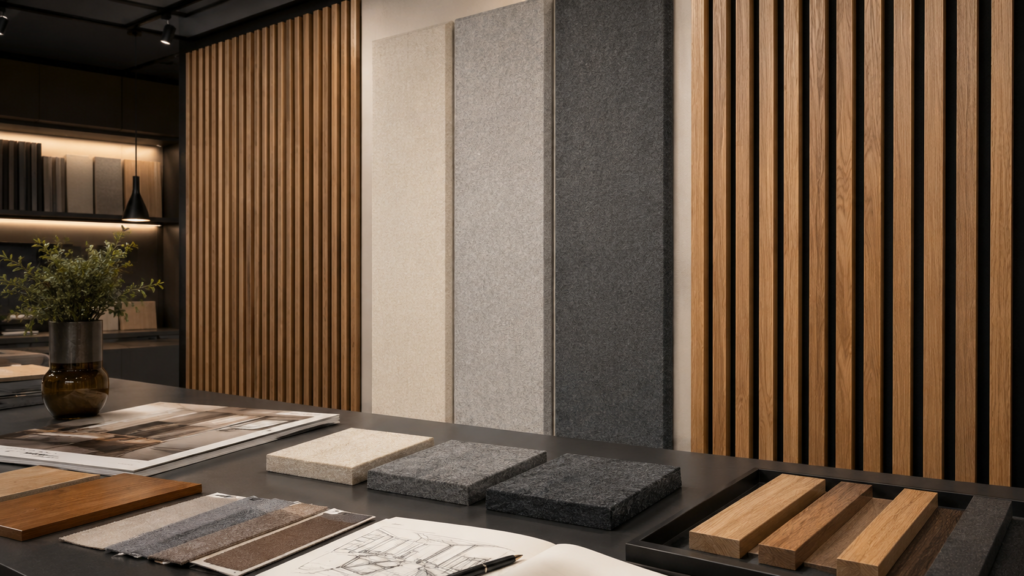
Second, match the material to the space. Polyester fiber acoustic panels can be lightweight, colorful, and flexible for many interiors. Wood slat acoustic panels add texture and warmth. Fabric panels can blend into office and hospitality spaces. Perforated panels may suit more architectural projects.
Third, consider visual rhythm. Panels do not need to cover every wall. They can be arranged as feature walls, vertical strips, ceiling clouds, modular patterns, or partial wall systems.
Fourth, ask for performance information. When possible, compare absorption test data, material thickness, installation method, fire safety documentation, and maintenance requirements.
For example, wood strip polyester fiber Acoustic Panels can be a useful choice when a project needs both visual texture and sound absorption. They can fit modern offices, living rooms, studios, restaurants, and commercial interiors where wall design and acoustic comfort need to work together. You can review related product options here: Acoustic Panels.
Pro Tip: Do not choose panels only by color. Thickness, backing material, installation gap, and coverage area can all affect acoustic performance.
Common Mistakes When Buying Decorative Acoustic Panels
The first mistake is treating panels as decoration only. A panel that looks good but has no meaningful absorption data may not solve the sound problem.
The second mistake is using too few panels. A small decorative strip may look nice but may not reduce reverberation enough in a large restaurant, meeting room, or open office.
The third mistake is placing panels randomly. Sound reflections often come from specific surfaces. Good placement should respond to seating, speakers, work areas, and wall geometry.
The fourth mistake is ignoring maintenance. In public spaces, panels may need to resist dust, fingerprints, humidity, or frequent cleaning.
The fifth mistake is forgetting fire safety and building requirements. Commercial projects should always confirm applicable local standards and documentation before installation.
Future Trend
Acoustic design is moving from hidden technical treatment to visible interior expression. Designers are using acoustic wall panels as feature walls, ceiling elements, zoning tools, and brand design surfaces.
This trend is especially important in open offices, boutique hotels, modern restaurants, wellness spaces, and home entertainment rooms. People want interiors that feel calm, but they also expect texture, warmth, and visual identity.
The future of Acoustic Panels will likely focus on three directions: better design flexibility, better material sustainability, and more transparent performance data. Buyers will not only ask “Does it look good?” They will ask “Does it work, does it last, and does it fit the design concept?”
Conclusion
Acoustic Panels should not force designers to choose between sound control and visual style. In modern interiors, they can support both. The right panel solution depends on the room’s function, noise problem, material preference, installation method, maintenance needs, and overall design language.
For offices, restaurants, hotels, studios, home theaters, and commercial interiors, the strongest result comes from treating acoustic panels as part of the interior plan from the beginning. When sound absorption and decorative design are considered together, a space can look better, feel calmer, and perform more effectively in daily use.
FAQ
Are acoustic panels the same as soundproofing?
No. Acoustic panels mainly reduce reflections and reverberation inside a room. Soundproofing blocks sound from passing between spaces.
Do acoustic panels really improve sound quality?
Yes, when selected and placed properly. They can reduce echo, improve speech clarity, and make interiors more comfortable.
What type of acoustic panel is best for modern interiors?
Wood slat acoustic panels, polyester fiber panels, and fabric panels are common choices because they can combine sound absorption with decorative design.
Where should acoustic panels be installed?
They are often installed on walls or ceilings near reflection points, meeting areas, seating zones, studios, dining areas, or open office spaces.
Can acoustic panels be decorative?
Yes. Many modern acoustic panels are designed as wall features, texture panels, color accents, or architectural design elements.