
Acoustic panels for home theaters should solve a real room problem, not turn the walls into a recording studio. If movie dialogue sounds buried, action scenes feel messy, or the room has a hard echo after every loud scene, the issue may not be the speaker system. It may be the room.
Table of Contents
Why Does a Home Theater Sound Muddy Even with Good Speakers?
A good speaker can still sound poor in a hard room.
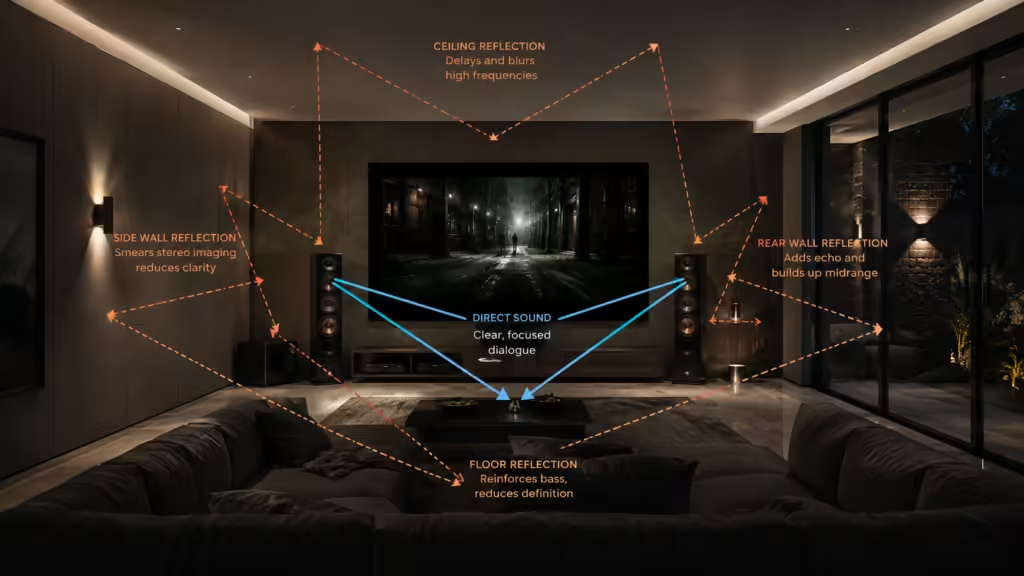
Bare walls, glass, tile floors, hard ceilings, and empty rear walls reflect sound back into the listening area. Those reflections overlap with direct sound from the speakers. The result is familiar: dialogue loses clarity, surround effects become less focused, and the room feels louder than it should.
The Wikipedia article on reverberation explains that reverberation happens when sound reflections continue after the original sound is produced. In a home theater, too much reverberation can make speech harder to understand and reduce listening comfort.
This is why home theater acoustic panels should be planned around the room, not just the equipment list. The goal is not to kill all sound. The goal is to reduce the reflections that blur the movie.
What Do Acoustic Panels Actually Fix in a Home Theater?
Sound absorption panels mainly reduce reflected sound inside the room. They help with flutter echo, hard-wall reflections, and some mid-to-high-frequency buildup.
They can improve:
- dialogue clarity;
- surround sound focus;
- listening comfort;
- echo control;echo
- wall-to-wall sound bounce;
- the sense of a cleaner soundstage.
They do not fully soundproof the room. Soundproofing is about stopping sound from passing through walls, doors, windows, floors, and ceilings. Acoustic panels mainly work inside the room by reducing reflections.
ASTM C423 is a standard method for measuring sound absorption in a reverberation room by comparing decay rates before and after a specimen is added. That matters because acoustic performance should be judged by absorption behavior, not only by how soft a panel feels. See the ASTM page for C423 sound absorption testing.
Where Should Acoustic Panels Go in a Home Theater?
Start with the reflection points before filling empty walls.
For most rooms, the first useful locations are:
1.side walls near first reflection points;
2.rear wall behind seating;
3.wall areas around the TV or screen;
4.ceiling reflection zone, if the ceiling is hard and low;
5.corners only if bass buildup is also being treated with deeper products.
The first reflection point is where sound from a speaker bounces off a wall before reaching the listener. Treating this area often helps dialogue and stereo imaging feel cleaner. KEF’s article on first reflections and absorption in home theater design explains why early reflections affect what listeners hear at the seating position.
For best acoustic panels for home theater walls, placement usually matters more than covering the largest wall area. A few panels in the right locations often help more than random decoration across the room.
How Many Sound Absorption Panels Does a Media Room Need?
There is no single number because room size, wall material, speaker layout, and seating position all change the answer.
A practical starting point looks like this:
| Room Type | Starting Point | What to Check First |
|---|---|---|
| Small TV room | 4–6 panels | side walls and rear wall |
| Medium media room | 6–10 panels | first reflections and echo behind seats |
| Dedicated theater room | 10+ panels | side walls, rear wall, ceiling, and bass behavior |
This is a starting plan, not a rule. A small room with glass and tile may need more treatment than a larger room with carpet, curtains, and soft furniture.
For media room panels, the safest approach is to treat the obvious reflection zones first, then listen again. If dialogue becomes clearer and echo drops, the next step can be visual balance rather than adding more panels.
Can Home Theater Acoustic Panels Look Decorative Instead of Studio-Like?
Yes, and for homes, they should.
A home theater is still a room people live in. Panels should work with the sofa wall, TV wall, lighting, and color palette. That is where many projects go wrong: panels are bought for sound first, then placed like random patches.
Better choices include:
- fabric colors close to the wall color;
- vertical panels that read like wall décor;
- symmetrical layouts around seating;
- larger panels on the rear wall instead of many tiny pieces;
- clean spacing between panels;
- panels matched with lighting, wood, or soft furnishings.
If the media room connects with a wider interior design project, this guide to architectural wall solutions offers ideas on how wall panels can support both functional surfaces and visual design.
For homeowners who want sound absorption with a cleaner wall finish, these wall panels can be reviewed after the room size, panel placement, color direction, and installation method are confirmed.
Are Polyester Acoustic Panels Good for Home Theater Walls?
Polyester acoustic panels are a practical option for many residential spaces because they are lightweight, available in different colors, and easier to integrate into wall design than bulky studio foam.
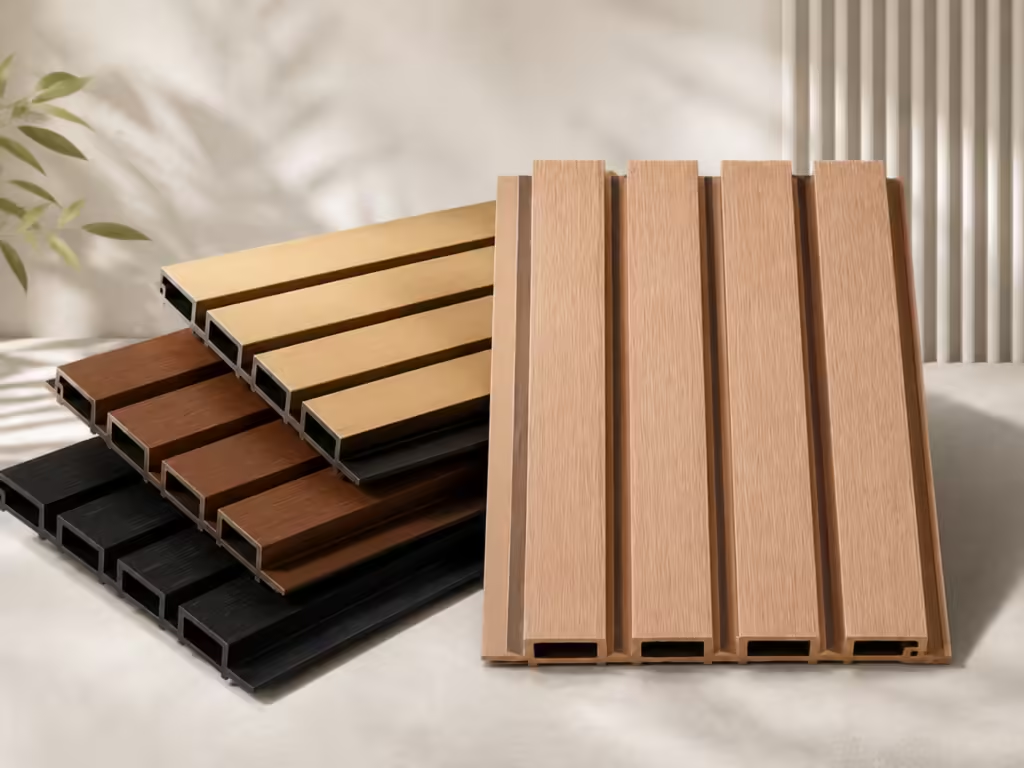
For sound absorption panels in a living room theater or media room, polyester can work well for echo and mid-to-high-frequency reflections. It is especially useful where homeowners want panels that feel closer to interior wall finishes than technical studio treatment.
For buyers comparing thickness, material, color, density, and installation options, this polyester acoustic panels buying guide explains what to check before choosing panels for a home theater or media room.
What Should Go on the TV Wall, Side Walls, and Rear Wall?
Different walls solve different sound problems. Treating every surface the same way can make the room look heavy and sound too dry.
| Area | Main Problem | Panel Strategy |
|---|---|---|
| TV wall | visual focus and early reflection | decorative acoustic wall panels around, not blocking the screen |
| Side walls | first reflections | medium-size panels near speaker reflection points |
| Rear wall | slap echo behind seats | larger panels or patterned layout |
| Ceiling | hard vertical bounce | optional ceiling cloud if needed |
| Corners | bass buildup | may need bass traps, not regular thin panels |
This is where how to improve home theater acoustics becomes a design decision. The room should sound controlled, but not dead. Movie sound needs clarity, impact, and space.
When Are Acoustic Panels Not Enough?
Acoustic panels help with reflections inside the room, but they do not fix every sound problem.
They may not be enough when:
- the subwoofer is placed poorly;
- bass builds up strongly in corners;
- the room has too much glass;
- the seating is against the rear wall;
- outside noise leaks through doors or windows;
- the goal is soundproofing, not room acoustic control.
For loud listening, comfort also matters. The NIDCD page on noise-induced hearing loss notes that long or repeated exposure to sound at or above 85 dBA can cause hearing loss. Home theater acoustics should make sound clearer, not simply push the volume higher.
NIOSH also recommends precautions when noise is 85 dBA or higher, as explained on its noise-induced hearing loss page. That is a useful reminder for media rooms where users may raise volume to overcome poor clarity.
What Should a Home Theater Fix First?
Do not start by covering every wall.
Start by listening for the problem: muddy dialogue, slap echo, harsh reflections, or bass buildup. Then treat the side wall reflection points, rear wall, TV wall area, and ceiling only where needed.
The best acoustic panels for home theaters are not the ones that make the room look the most treated. They are the panels placed where the room actually needs control, so the movie sounds clearer and the walls still feel like part of the home.
FAQ
Do acoustic panels make home theaters sound better?
Yes. They can reduce echo and wall reflections, making dialogue and surround effects clearer. They will not fix every bass or soundproofing problem.
Where should acoustic panels be placed in a home theater?
Start with side-wall first reflection points, the rear wall behind seating, and areas around the TV or screen wall. Add ceiling treatment only if reflections are still obvious.
How many acoustic panels do I need for a media room?
A small room may start with 4–6 panels. A medium media room may start with 6–10. The final number depends on room size, wall material, seating, and speaker layout.
Are acoustic panels the same as soundproofing?
No. Acoustic panels reduce reflections inside the room. Soundproofing reduces sound transfer between rooms.
Should I put acoustic panels behind the TV?
Sometimes, but do not treat only the TV wall. Side walls and the rear wall often have a larger effect on dialogue clarity and echo control.
Can acoustic panels look decorative?
Yes. Color, size, spacing, fabric texture, and symmetrical placement can make panels look like part of the room design.