
Table of Contents
Soundproof Wood Board Material is a practical choice for acoustic panels that must balance visual warmth with measurable sound control. In this article we focus on the materials behind modern wood-faced panels (≈70% material discussion), how to combine them with absorbers, and practical spec tips you can use when selecting products such as lyPanel’s polyester-core panels.
Core construction and why material choice matters
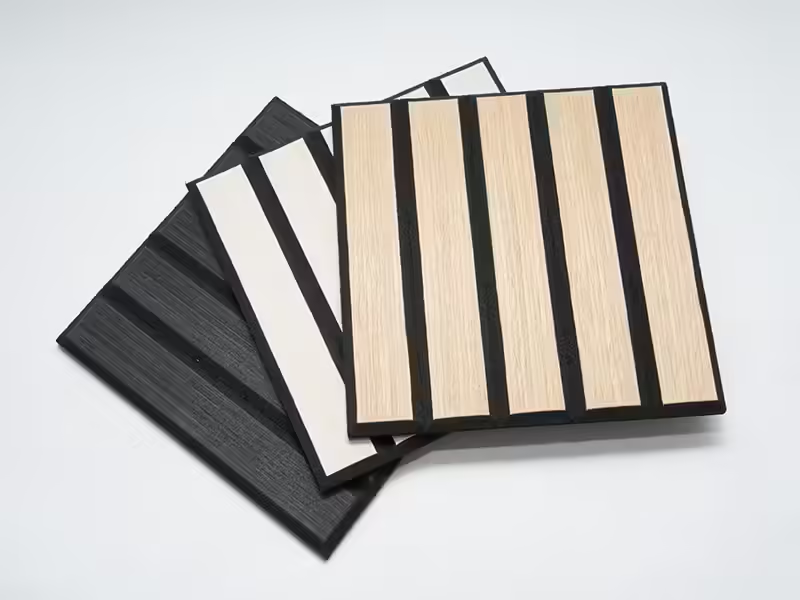
A typical high-performance panel uses a three-layer build: a decorative wood face, an absorptive core, and a structural backing. Choosing the right Soundproof Wood Board Material means considering core porosity (open-celled polyester, fiberglass, mineral wool), face design (solid slat, veneered MDF), and bonding method. Panels using a polyester fiber core bonded to MDF often hit high NRC numbers while remaining light and paintable—that’s why many specifiers consider sustainable polyester fiber wood acoustic panels for hospitality and office projects.
Absorptive cores — the real acoustic engine
The wood face alone offers diffusion and looks. The core does the sound absorption. For Soundproof Wood Board Material, open-cell cores convert acoustic energy to heat; they’re essential for mid- and high-frequency control. For projects requiring broader performance, MDF-backed sound absorbing wood panels with a 25–100 mm cavity are common: the cavity depth and core density control low-frequency absorption.
Performance metrics to request from manufacturers
When evaluating Soundproof Wood Board Material, ask for NRC, absorption coefficients by octave band, and fire classification (e.g., EN 13501 or ASTM E84 results). High-end products—such as some that advertise NRC ~0.9—use engineered polyester or mineral wool cores. If you’re designing a studio, consider high NRC wood strip acoustic panels for recording studios; they combine visual wood slats with absorptive cores tuned for speech and music frequencies.
Combining wood panels with discrete absorbers
A common approach is to use wood panels for mid/high absorption and pair them with porous absorbers or tuned resonators for bass control. Soundproof Wood Board Material performs best when mounted over a designed cavity or coupled to fiberglass bass traps in corners. For critical rooms, combine wood panels with prefab wood acoustic wall panels with fiberglass core behind them, or place Helmholtz resonators behind selected slats to address specific low-frequency modes.
Installation tips that preserve material performance
Correct mounting preserves the rated values of your Soundproof Wood Board Material. Tips: leave the manufacturer-recommended cavity depth, seal panel edges to avoid flanking, and use resilient fixings where structure-borne vibration is a concern. For high traffic zones, choose factory-laminated or sealed finishes to protect wood slats from humidity and wear.

Finishes, durability and code compliance
Finish choice affects both aesthetics and test results. When specifying Soundproof Wood Board Material, request VOC data, moisture resistance, and reaction-to-fire reports. Many clients require fire-rated wood acoustic panels for public buildings; you can find wood panels with treated faces or intumescent coatings that meet stricter class ratings.
Practical material pairings and example use cases
For an open-plan office: use wood panels with polyester cores at workstations to control speech privacy, and add MDF-backed sound absorbing wood panels near meeting rooms for extra isolation. For a restaurant: choose sustainable polyester fiber wood acoustic panels to blend eco-claims with good mid-frequency absorption. For a small broadcast studio: mix Soundproof Wood Board Material with dedicated corner bass traps and targeted resonators.
Quick specification checklist (for product comparison)
- Confirm NRC and octave-band absorption data for the Soundproof Wood Board Material option.
- Verify core type (polyester fiber, mineral wool, or fiberglass) and density.
- Check face construction: solid wood slat, veneered MDF, or perforated laminate.
- Request fire-rating and VOC certificates (EN/ASTM/ISO tests).
- Plan cavity depth and complementary absorber types for low-frequency control.
Final notes on selection and sustainability
Selecting the right Soundproof Wood Board Material means balancing visual goals, acoustic targets, and building constraints. Where sustainability is important, ask for recycled-content cores or low-VOC binders. For public or code-sensitive projects, insist on tested fire-rated systems—some suppliers provide fire-rated wood acoustic panels specifically designed for public buildings.
If you want to learn more about Acoustic Panels, please click here.