
In contemporary interior architecture, the shift from monochromatic, flat surfaces to tactile, three-dimensional textures has redefined the meaning of luxury. Among the most versatile tools in a designer’s arsenal, Fluted Wall Panels have emerged as the definitive choice for those seeking to introduce rhythm and architectural depth to a space. By utilizing repetitive vertical grooves, these panels manipulate light and shadow to create a sense of movement that static paint or wallpaper simply cannot replicate.
This guide explores the intersection of aesthetic intent and technical execution, providing a framework for homeowners and professionals to master the art of textured wall design.
Table of Contents
The Architectural Logic of Texture
For years, the “less is more” philosophy often translated to bare, white walls that felt clinical rather than curated. The resurgence of Fluted Wall Panels marks a return to craft-oriented interiors. These panels utilize a rhythmic “ribbed” pattern that draws the eye upward, effectively increasing the perceived height of a room while adding a sophisticated layer of acoustic diffusion.
Unlike traditional wainscoting, Fluted Wall Panels offer a more streamlined, modern aesthetic. They bridge the gap between mid-century modern slatted designs and contemporary minimalism. Whether used as a subtle backdrop or a bold focal point, the geometric regularity of these panels provides a grounding element in open-plan residences.
Materials and Sensory Impact
The tactile quality of Fluted Wall Panels depends heavily on the material substrate. For high-traffic residential areas, Wood Plastic Composite (WPC) is often preferred for its durability and resistance to moisture. In contrast, solid timber offers an unmatched organic warmth and unique grain patterns that appeal to the ultra-luxury segment.
To achieve a flawless finish, the manufacturing process relies on large panel cutting technologies. This allows for the production of expansive sheets that maintain the integrity of the fluted pattern across several meters. When a designer specifies Fluted Wall Panels, they are not just choosing a pattern; they are choosing a structural element that must be fabricated with millimetric precision to ensure the vertical lines remain perfectly parallel during installation.
How to Create a Luxury Accent Wall with Fluted Panels
Designing a statement wall requires more than just mounting timber to a surface. To understand how to create a luxury accent wall with fluted panels, one must first consider the “Rule of Three”: Texture, Lighting, and Proportion.
1.Strategic Lighting: Texture is invisible without light. Incorporating top-down “wall washing” LEDs highlights the peaks and valleys of the fluted design, creating a dramatic chiaroscuro effect.
2.Color Saturation: Deep charcoals, walnut tones, or even matte clay finishes can turn Fluted Wall Panels into a piece of permanent art.
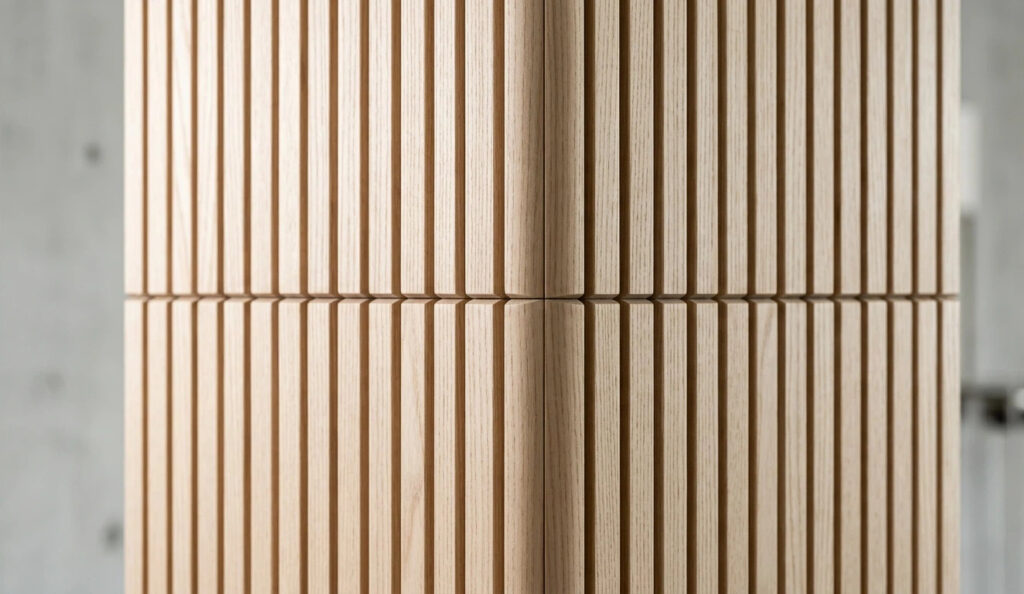
3.Seamless Transitions: The hallmark of luxury is the absence of visible joints. By utilizing large panel cutting for the base substrates, installers can cover entire wall spans without the unsightly horizontal seams that plague cheaper, DIY-grade alternatives. Precision large panel cutting ensures that even the most complex corner wraps look like a single, continuous piece of carved wood.
Technical Specifications: A Comparative Analysis
Choosing the right profile is critical for the visual scale of the room. A tighter “reeded” pattern feels delicate and jewel-box-like, while a wider “slatted” pattern feels bold and architectural.
| Feature | WPC (Composite) | Natural Hardwood | PU (Polyurethane) |
| Durability | High / Impact Resistant | Moderate / Requires Care | Low / Decorative Only |
| Moisture Resistance | Waterproof (Ideal for Baths) | Sensitive to Humidity | Waterproof |
| Max Seamless Height | 2.8m – 3.2m via large panel cutting | Variable (Stock dependent) | Typically 2.4m |
| Sustainability | High (Recycled content) | High (If FSC certified) | Low (Petroleum based) |
| Acoustic Rating | Moderate Absorption | Natural Diffusion | Low |
Functional Versatility and Sustainability
Beyond the living room, Fluted Wall Panels are being utilized in master suites to serve as integrated headboards. In these applications, the panels often incorporate recessed bedside lighting and integrated power outlets. The use of large panel cutting ensures that these cutouts are clean and do not splinter the surrounding decorative slats.
From a sustainability perspective, many Fluted Wall Panels are now produced using bio-based resins and reclaimed wood fibers. When sourced from manufacturers who prioritize large panel cutting efficiency, material waste is reduced by up to 20%. This commitment to “Sustainable Luxury” is a major selling point for eco-conscious designers.
The Final Flourish: Maintenance and Longevity
Despite their complex appearance, high-quality Fluted Wall Panels are remarkably low-maintenance. Most WPC-based panels require nothing more than a soft brush or a vacuum with a brush attachment to remove dust from the grooves. Because large panel cutting creates a stable, warp-resistant foundation, these panels will remain straight and true for decades, unlike traditional thin moldings that may bow over time.
In the final assessment, the decision to install Fluted Wall Panels is an investment in the long-term character of a home. When combined with the precision of large panel cutting and a thoughtful lighting plan, these decorative slatted panels transform a simple room into a curated sensory experience.
FAQ
Can I install Fluted Wall Panels in a bathroom?
Yes, but you must choose WPC or PU materials. These are waterproof and will not warp in high-humidity environments.
How do Fluted Wall Panels affect room acoustics?
The vertical grooves act as sound diffusers. While they are not “soundproofing,” they effectively break up echoes and prevent sound from bouncing off flat surfaces, making the room feel quieter and more “expensive.”
Why is large panel cutting important for my project?
Large panel cutting allows for taller, wider pieces. This means fewer joints on your wall, resulting in a much cleaner, more high-end appearance.
Do I need a professional to install these?
For a standard accent wall, an experienced DIYer can handle it. However, if your design requires large panel cutting for invisible doors or curved walls, a professional carpenter is recommended to ensure perfect alignment.
What is the most popular color for Fluted Wall Panels
We are seeing a move toward “Organic Earth” tones—muted terracotta, deep moss greens, and warm sand finishes that highlight the precision of the large panel cutting work.