
If you are navigating the overwhelming world of home renovation, choosing the right floors can feel like trying to learn a completely new language. As you search for the best flooring options on the market, you will undoubtedly encounter a sea of acronyms. Two of the most popular are SPC and LVP.
But when it comes down to the wire, how do you choose? Understanding the nuances of spc flooring vs lvp is crucial for making an investment that looks beautiful, fits your lifestyle, and stands the test of time.
In this comprehensive guide, we will break down exactly what these terms mean, how they compare, and which material deserves a place in your home.
Table of Contents
Understanding Modern Vinyl Flooring Types
Before diving into the direct spc vs lvp comparison, it helps to understand the broader category of modern vinyl. Gone are the days of the cheap, peeling sheet vinyl from the 1980s. Today’s vinyl flooring types are engineered for peak performance, mimicking natural wood and stone with stunning realism.
What is LVP (Luxury Vinyl Plank)?
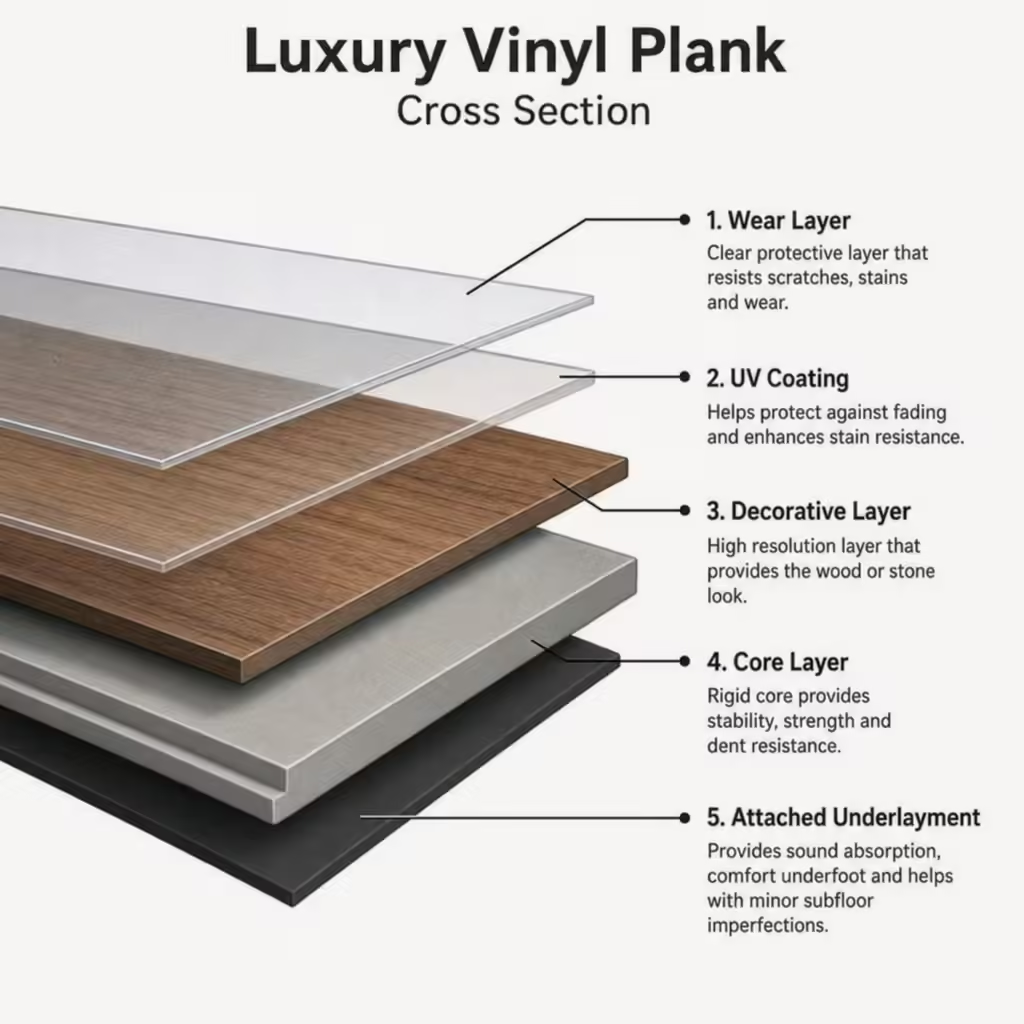
At its most basic, luxury vinyl plank (LVP) is a multi-layered synthetic flooring product shaped into planks to mimic traditional hardwood. Standard LVP is known for being highly water-resistant (often 100% waterproof) and relatively flexible. Its core is typically made from traditional polyvinyl chloride (PVC), making it pliable and easy to work with.
What is SPC Flooring?
SPC stands for Stone Plastic Composite (or Stone Polymer Composite). It is technically a sub-category or an upgraded version of luxury vinyl. When looking at spc flooring vs vinyl flooring, the defining feature of SPC is its ultra-dense core. Instead of standard PVC, the core is manufactured from a mixture of natural limestone powder, polyvinyl chloride, and stabilizers.
Conversely, Rigid Stone Composite (SPC) blends high-ratio calcium carbonate with polymer stabilizers. This engineering optimization allows the planks to meet ASTM F3261 specifications for resilient flooring with rigid polymeric cores, yielding extreme indentation resistance
traditional Luxury Vinyl Plank (LVP) relies heavily on a flexible plasticized core. These materials are manufactured and classified under the industry-standard ASTM F1700 specification for solid vinyl floor tile, which defines their baseline geometric tolerances and wear layer requirements
The Core Differences: Rigid Core Luxury Vinyl vs Flexible Vinyl
To truly understand spc vs lvp flooring, we have to look beneath the surface. The visual layers (the printed design and the clear protective topcoat) can be identical on both products. The real battle of lvp vs spc happens in the core.
Composition: Limestone Powder vs PVC Core Materials
The fundamental difference between these two materials lies in their structural makeup.
- LVP: Uses a flexible PVC core. This makes the planks softer, more pliable, and slightly lighter.
- SPC: Utilizes a stone-plastic composite core. By weighing limestone powder vs PVC core materials, manufacturers created a plank that is incredibly dense and unyielding.
2. Flooring Durability and Impact Resistance
When it comes to overall flooring durability, both options are highly resilient. However, they handle abuse differently. Because of its dense makeup, the impact resistance of stone plastic cores is vastly superior. If you drop a heavy cast-iron pan on standard LVP, the flexible core might dent. If you drop that same pan on SPC, the rigid core will likely shrug off the impact without leaving a permanent indentation.
3.Comfort and Feel
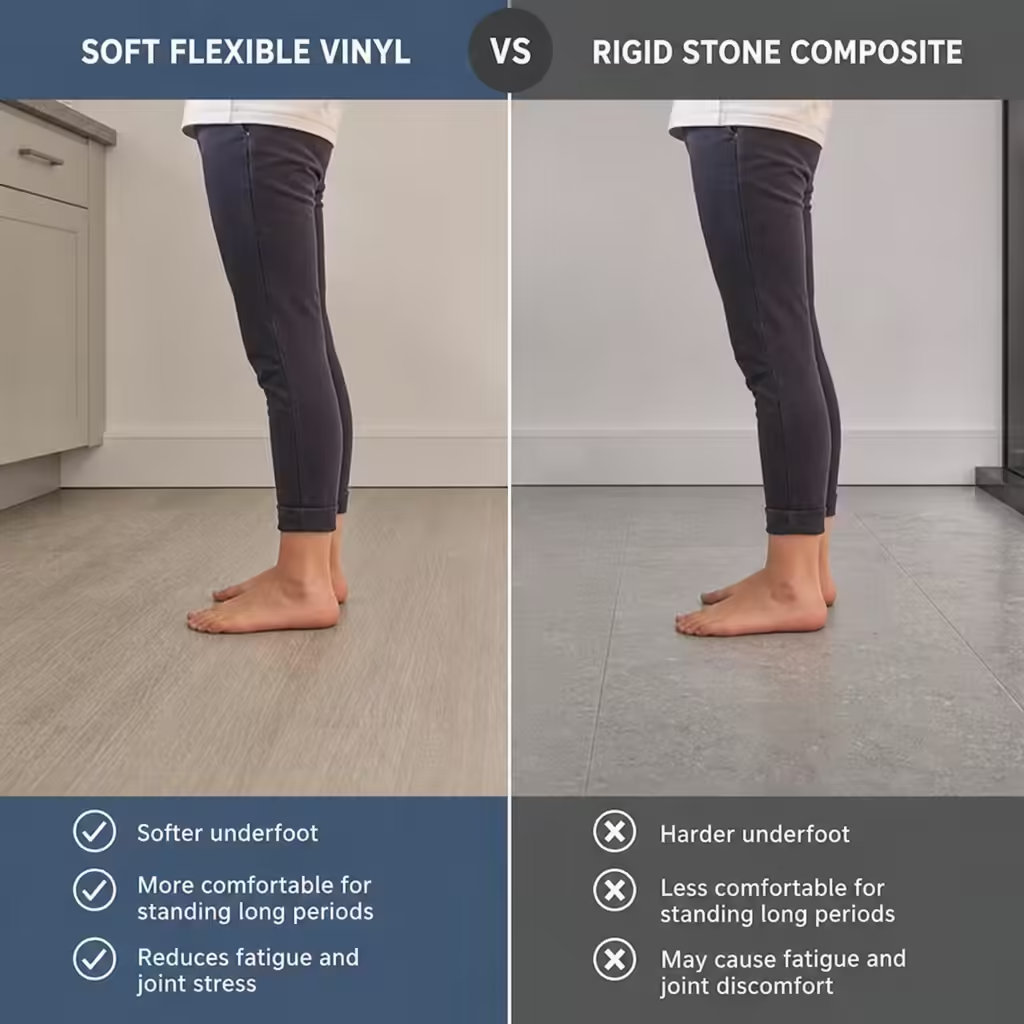
The density of SPC comes with a slight trade-off in coziness. If you are comparing the comfort underfoot differences in composite flooring, traditional LVP wins. Its flexible PVC core provides a bit of “give,” making it softer and warmer to stand on for long periods. SPC feels harder and colder underfoot, closely resembling the feel of actual tile or solid hardwood.
Actionable Tip: If you are installing flooring in a kitchen where you stand to cook for hours, LVP might save your joints. If you are installing in a high-traffic mudroom, SPC’s dent resistance makes it the better choice.
Which Flooring is Best for Your Specific Needs?
Choosing between these two materials often comes down to your home’s unique environment, subfloor conditions, and daily traffic. Let’s look at a few common scenarios.
Handling Subfloor Imperfections
A common question during renovations is: which vinyl plank flooring is best for uneven subfloors? Standard flexible LVP requires a nearly perfect, perfectly level subfloor. Because it is pliable, it will eventually “telegraph” or contour to every bump, dip, or flaw beneath it over time. SPC, on the other hand, is the clear winner here. Because it is highly rigid, it can bridge minor gaps and slight undulations in the subfloor without bending or showing those imperfections on the surface. (Note: Extreme unevenness still requires subfloor leveling prior to installation).
Sunlight and Temperature Fluctuations
If you have large windows or live in a region with dramatic temperature shifts, you must consider thermal expansion in floating floors. Standard LVP can expand and contract significantly when exposed to direct heat, which can lead to buckling or peaking at the seams. SPC is heavily favored in these environments. The stone-composite core makes it dimensionally stable, meaning it barely expands or contracts. Therefore, if you are looking for UV resistance in sunrooms for plank flooring, or need a floor for a non-climate-controlled cabin, SPC is the safest bet.
forces unreinforced LVP profiles into irreversible dimensional variations when exposed to volatile temperatures. When evaluated under international ISO 10582 standards for heterogeneous poly(vinyl chloride) floor coverings, SPC rigid core structures exhibit significantly lower thermal expansion coefficients
Pets, Kids, and Heavy Traffic
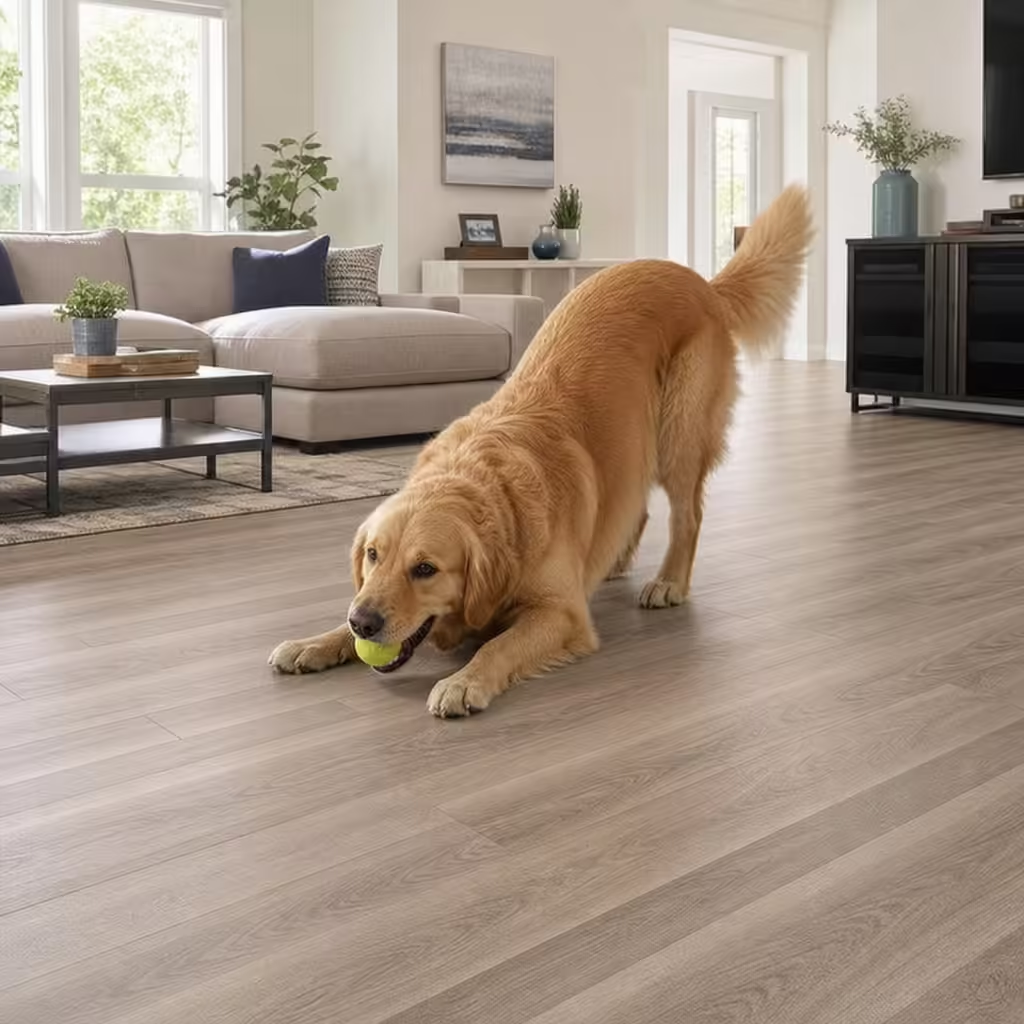
Both materials serve beautifully as waterproof flooring for high traffic areas. Spills, muddy paws, and wet shoes won’t warp or destroy the planks. However, for busy households, you also need to factor in scratch resistance for households with pets. Interestingly, scratch resistance doesn’t actually depend on the core (SPC or LVP) at all—it depends on the top “wear layer.”
The Importance of the Wear Layer
When evaluating the pros and cons of rigid core construction versus flexible vinyl, you cannot ignore the surface protection. Both SPC and LVP feature a clear urethane coating on top, known as the wear layer, which dictates how easily the floor will scratch.
Here is a quick wear layer thickness comparison guide to help you shop:
- 6 mil to 8 mil: Suitable for light residential use (guest bedrooms, low-traffic areas).
- 12 mil: The standard for moderate residential traffic. Offers decent protection against pet claws.
- 20 mil: Highly recommended for busy households, large dogs, and light commercial spaces.
- 28+ mil: Commercial-grade protection.
Takeaway: A flexible LVP with a 20-mil wear layer will resist scratches much better than an SPC floor with a 6-mil wear layer. Always check the mil thickness before purchasing!
Installation and Underlayment
Both LVP and SPC are incredibly popular among DIY enthusiasts because they are typically installed as floating floors. However, there are a few installation nuances.
The Locking Mechanisms
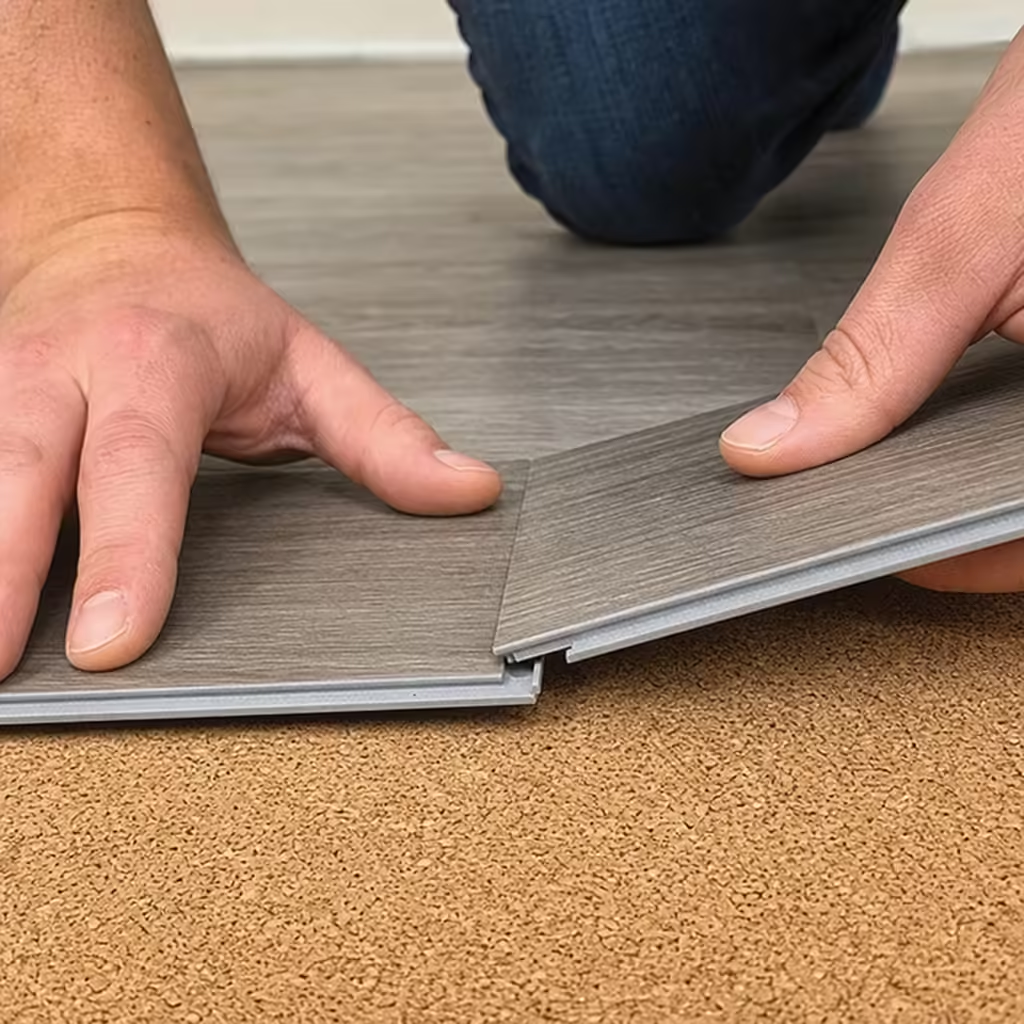
When reviewing click lock installation system requirements, you will find that SPC planks have very strong, rigid locking mechanisms. They snap together securely and are less likely to break during installation compared to the thinner, flexible tongues and grooves of standard LVP.
Choosing the Right Underlayment
Because SPC is so hard, it can sound hollow or “clicky” when walked upon. Many premium SPC and LVP products come with an attached underlayment pad. If yours does not, you will need to choose one. When looking at cork vs foam underlayment for vinyl planks:
- Cork: Offers exceptional acoustic insulation, natural antimicrobial properties, and adds warmth. It is highly recommended for rigid SPC to soften the acoustic impact.
- Foam: (Specifically dense cross-linked polyethylene) is cost-effective, highly moisture-resistant, and provides good cushioning, making it great for standard LVP over concrete slabs.
Note: Never use a highly plush or thick underlayment with a click-lock system, as too much “cushion” can cause the locking joints to stress and break.
Budgeting and Health Considerations
How Much Do They Cost?
Budget is often the deciding factor in home renovations. The cost per square foot for residential flooring varies based on brand, wear layer, and attached padding.
- Standard LVP: Generally more affordable. You can find quality options ranging from $2.00 to $4.50 per square foot.
- SPC Flooring: Because of the denser core and manufacturing process, SPC is slightly more expensive, typically ranging from $3.50 to $7.00 per square foot.
Indoor Air Quality
Historically, some cheap PVC products raised concerns regarding off-gassing and volatile organic compounds (VOCs). Today, the industry has heavily regulated this. Whether you choose spc flooring vs lvp, look for certifications like FloorScore®. Additionally, many eco-conscious homeowners prioritize phthalate free luxury vinyl options. Fortunately, the vast majority of premium LVP and SPC brands proudly manufacture phthalate-free products today, ensuring your home’s indoor air quality remains pristine.
Pros and Cons
To make your final decision easier, here is a quick summary of the strengths of each material.
SPC Flooring (Rigid Core)
- Pros: Incredible dent and impact resistance, highly dimensionally stable (resists thermal expansion), bridges minor subfloor imperfections easily, 100% waterproof.
- Cons: Harder and colder underfoot, slightly more expensive, can be louder without proper underlayment.
LVP (Flexible Core)
- Pros: Softer and warmer to walk on, generally more budget-friendly, excellent acoustic properties, 100% waterproof.
- Cons: Can dent under heavy, concentrated weight; susceptible to expansion in high heat/direct sunlight; telegraphs subfloor imperfections.
The debate of spc flooring vs lvp doesn’t have a single “right” answer—it depends entirely on where and how you plan to use it.
If you are renovating a sunroom, a high-traffic commercial space, or a home with slightly uneven subfloors, SPC flooring is undeniably your best bet. Its rigid, stone-composite core offers unmatched stability and dent resistance.
However, if you are outfitting a cozy bedroom, a kitchen where you spend hours standing, or you are working with a tighter budget on a perfectly level subfloor, traditional luxury vinyl plank (LVP) will serve you brilliantly by offering superior comfort and warmth.
Whichever route you choose, prioritize a thick wear layer and a quality underlayment. By matching the right vinyl flooring types to your home’s unique demands, you will enjoy a stunning, durable floor for decades to come.