
In the evolving landscape of architectural design and commercial upgrades, the choice of wall materials has moved far beyond mere aesthetics. As engineering standards and sustainability requirements tighten, Interior Wall Panels have emerged as the primary choice for architects and contractors worldwide. This shift is driven not only by their versatile visual appeal but also by their significant advantages in acoustics, moisture resistance, and installation efficiency.
Whether you are designing a minimalist executive suite or seeking a durable solution for high-traffic commercial restrooms, understanding the technical nuances of different panel materials is critical to project success. This guide explores the engineering behind high-quality wood wall panels and provides professional selection criteria for diverse commercial environments.
Table of Contents
Why Composite Wood Panels Lead the Market
In commercial applications, traditional drywall and paint often fail to meet the rigorous demands for durability. High-performance interior wood wall panels combine the organic warmth of natural timber with the structural stability of advanced synthetics.
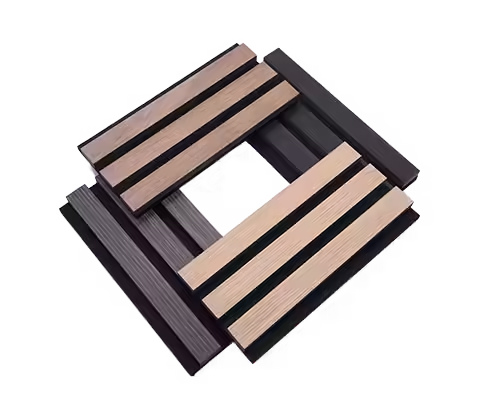
Currently, the market favors WPC (Wood-Plastic Composite) and high-density fiberboards. These wood panels undergo specialized surface treatments to resist scratches, heavy impacts, and UV-induced fading. By visiting our Wall Panel Product Center, you can explore how multi-layer lamination technology achieves superior structural integrity.
Acoustics and Office Design: The Power of Acoustic WPC Panels
In open-plan work environments—the hallmark of Modern office wall decor—noise pollution is a leading cause of decreased employee productivity. Traditional smooth wall surfaces reflect sound waves, creating echoes and distracting noise buildup.
Acoustic WPC panels (fluted wall panels) are engineered specifically to solve this pain point. By utilizing a calculated slat-and-gap design, these panels break up sound paths and facilitate physical diffusion, significantly improving the internal acoustic environment. This functional yet stylish version of Interior Wall Panels is becoming a standard specification for global corporate headquarters.
The High-Moisture Challenge: Solutions for Commercial Restrooms
For areas like public lavatories, moisture resistance is the only metric that matters. Standard wood swells and rots in humid conditions, but professional Waterproof bathroom panels utilize a completely closed-cell material structure.
For procurement managers seeking the Best waterproof interior wall panels for commercial restrooms, surface cleanability is as important as water resistance. These specialized Interior Wall Panels often feature antimicrobial topcoats that withstand repeated scrubbing with harsh industrial detergents without compromising the panel’s seal or color.
Technical Benchmarks: Selection Reference Guide
Making a bulk procurement decision requires a side-by-side analysis of physical parameters. The table below illustrates how different Interior Wall Panels perform across various commercial applications:
Commercial Grade Wall Panel Performance Table
| Physical Property | Standard WPC Panel | Acoustic WPC Fluted Panel | Reinforced Waterproof Panel |
| Primary Application | Hotel Corridors / Lounges | Modern office wall decor | Commercial Restrooms / Kitchens |
| Core Advantage | Impact resistance / Easy setup | Acoustic optimization / 3D depth | Best waterproof interior wall panels for commercial restrooms |
| Environmental Grade | E0 / E1 | E0 | E1 / Formaldehyde-Free |
| Fire Rating | Class B1 (Flame Retardant) | Class B1 | Class B1 |
| Surface Finish | Synchronized wood grain | Matte Fluted Texture | High-gloss or Stone anti-stain layer |
Compliance and Industry Standards
In B2B projects, safety is non-negotiable. Premium Interior Wall Panels must adhere to international fire and environmental codes.
- Fire Safety: Commercial spaces typically require materials to meet ASTM E84 Class A or B ratings. This ensures that in extreme events, wall surfaces do not contribute to rapid flame spread.
- Environmental Standards: Modern “Green” buildings often pursue LEED certification; therefore, the formaldehyde emission of Interior Wall Panels must fall below ultra-low thresholds.
Because of these rigorous standards, our wood wall panels are increasingly adopted by international contractors as a core component of sustainable construction.
Installation Efficiency: The Contractor’s Edge
For contractors, time on-site directly impacts profitability. Traditional wood veneering or tile work is labor-intensive. In contrast, modern Interior Wall Panels utilize Tongue and Groove interlocking systems. This allows installers to secure panels directly onto leveled masonry or metal stud frames.
This modular approach to Interior Wall Panels reduces labor hours by over 50% and minimizes on-site dust and waste. This is particularly attractive for “live” renovations in hotels or malls where operational downtime must be kept to a minimum.
Maintenance and Long-Term ROI
Selecting high-value Interior Wall Panels is a long-term asset management strategy. Low-quality wall finishes may require repainting or repairs every 2-3 years, whereas high-grade interior wood wall panels boast a service life of 10-15 years.
Their superior stability ensures that the panels will not warp or crack under temperature fluctuations or humidity swings. This “set-and-forget” maintenance profile significantly lowers operational expenditures (OPEX) for commercial property owners, making the initial investment highly profitable.
Conclusion
From the acoustic transformation offered by Acoustic WPC panels to the durability of Waterproof bathroom panels in extreme environments, Interior Wall Panels have evolved into a sophisticated blend of material science and modern design.
As global commercial real estate shifts toward high-precision management, choosing a surface solution that meets both aesthetic standards (Modern office wall decor) and industrial durability is the key to project value. Through continuous technological iteration, we are committed to providing the most resilient and refined finishing solutions for every professional project.
FAQ
Can these Interior Wall Panels be installed over existing tiles?
Yes, provided the tiles are flat and secure. High-strength structural adhesive combined with the interlocking system allows for a rapid renovation without demolition.
Which panel type is best for high-traffic public corridors?
We recommend wood panels with a reinforced wear layer (high Mohs hardness) to resist scuffs from luggage and equipment carts.
Do you support custom colors and lengths for large projects?
To minimize on-site waste, we offer length customization for specific projects to match varying ceiling heights and reduce scrap.
Why is WPC superior to solid wood for Waterproof bathroom panels?
WPC contains polymer components that provide 100% hydrophobicity at a molecular level, eliminating the rot and pest issues associated with natural wood in wet areas.