
Choosing exterior materials has become a strategic decision rather than a purely aesthetic one. Durability, lifecycle cost, environmental responsibility, and long-term visual consistency are now central concerns for modern construction and landscape projects. WPC wall panels have gained increasing attention in this context, offering a practical balance between natural appearance and engineered performance.
Within the first stages of planning, decision-makers often look beyond short-term results. They evaluate how materials will perform after years of exposure to sunlight, moisture, temperature changes, and daily use. In many outdoor and semi-outdoor applications, WPC wall panels have proven to be a reliable option that aligns performance expectations with sustainable design goals.
Table of Contents
Built for Demanding Outdoor Environments
Exterior wall systems face constant environmental pressure. Rain, humidity, UV radiation, and seasonal temperature fluctuations can quickly degrade conventional materials. Natural wood, while visually appealing, often requires frequent treatment, sealing, or replacement to maintain structural integrity.
WPC wall panels are engineered specifically to address these challenges. By combining wood fibers with high-performance polymer materials, the panels maintain dimensional stability and resist common outdoor threats such as moisture absorption, insect damage, and surface cracking. This makes them suitable for exterior façades, garden walls, fencing systems, and decorative cladding in both residential and commercial developments.
In outdoor environments where reliability matters more than short-term visual impact, this material structure provides consistent performance without adding maintenance complexity.
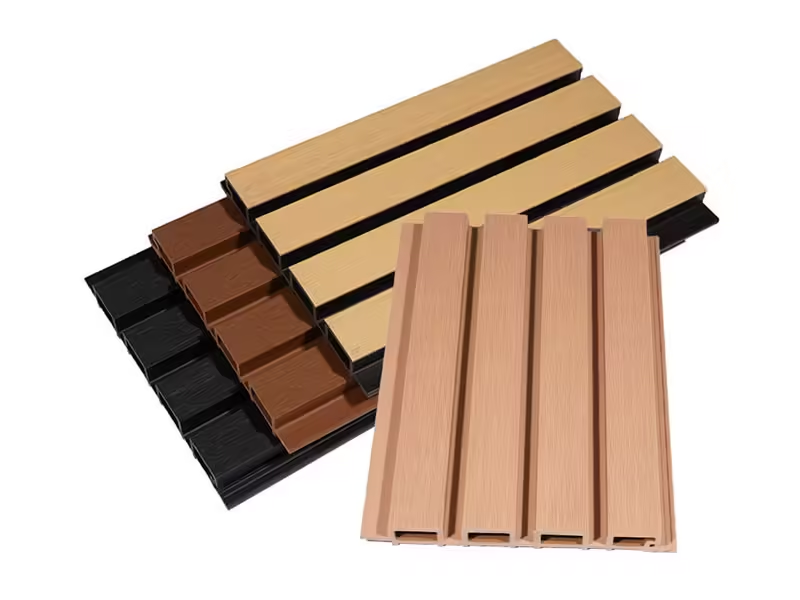
Material Composition That Supports Sustainable Construction
Sustainability in construction is no longer defined by a single label or certification. Instead, it is increasingly measured by how efficiently materials use resources across their entire lifespan.
WPC wall panels reduce reliance on solid timber by incorporating recycled polymers and wood fibers into a composite structure. This approach helps conserve natural wood resources while delivering a surface that closely resembles the warmth and texture of real wood. From a sustainability standpoint, this balance is significant: fewer trees consumed, longer material lifespan, and reduced need for chemical treatments.
Because wpc wall panels are designed to last for years without frequent replacement, they contribute to lower material waste over time—an important consideration for projects with long operational horizons.
Low Maintenance as an Environmental Advantage
Maintenance requirements directly affect both operational costs and environmental impact. Materials that need repainting, sealing, or replacement generate additional labor, coatings, and waste throughout their use cycle.
WPC wall panels offer a low-maintenance alternative. Their waterproof and weather-resistant surfaces do not require regular painting or anti-corrosion treatments. Simple cleaning is typically sufficient to keep the panels looking consistent over time.
For projects such as hospitality exteriors, commercial façades, residential developments, and public spaces, this advantage translates into fewer disruptions, reduced chemical usage, and lower long-term environmental footprint. In many cases, low maintenance becomes an indirect but meaningful sustainability benefit.
Design Flexibility Without Sacrificing Performance
Modern architectural projects demand materials that can adapt to varied design languages. Exterior walls are no longer purely functional elements; they contribute strongly to brand identity, spatial character, and user experience.
WPC wall panels support this flexibility through a wide range of textures, including 3D surfaces, plant-inspired patterns, and both classic and contemporary styles. Color and dimension customization further allows designers to align exterior finishes with broader architectural concepts.
Importantly, this visual adaptability does not compromise structural reliability. Even with decorative surface treatments, wpc wall panels retain their resistance to warping, fading, and surface deterioration—ensuring that design intent remains intact over time.
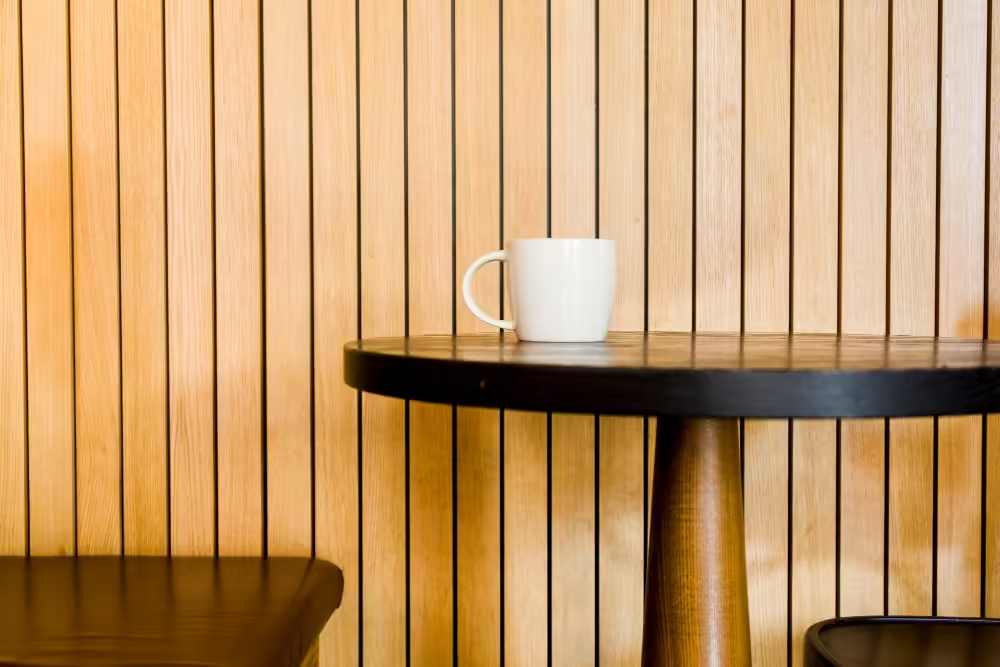
Application Scenarios That Demand Long-Term Reliability
Exterior materials are often selected under different performance priorities depending on the application. In residential settings, visual warmth and durability are key. In commercial or public projects, consistency, safety, and maintenance efficiency become equally important.
WPC wall panels are commonly used in:
- Building façades for retail, hospitality, and mixed-use developments
- Garden fences, balcony walls, and courtyard enclosures
- Public landscapes, parks, and shared outdoor facilities
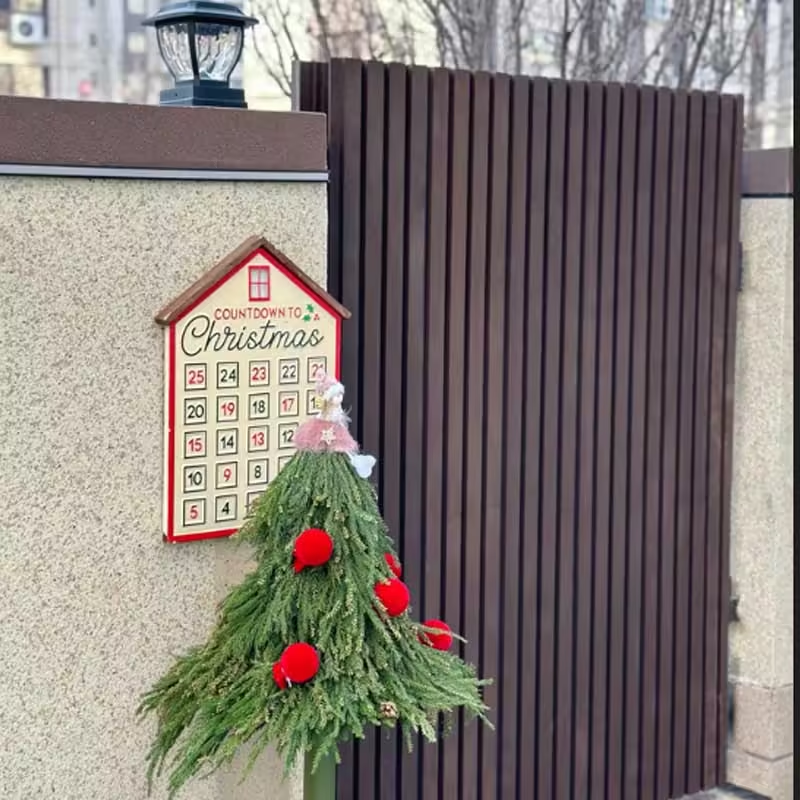
In each scenario, the panels provide a consistent surface that supports long-term use without frequent intervention. This reliability is especially valuable for projects that operate continuously and cannot afford repeated exterior renovations.
Lifecycle Value Over Initial Cost
Material selection often involves balancing upfront investment against long-term value. While initial pricing matters, it is only one part of the total cost equation.
When evaluating materials over a full lifecycle, factors such as durability, maintenance frequency, and replacement intervals significantly influence overall project cost. Wpc wall panels often perform well in this evaluation because they reduce the need for ongoing repairs and surface treatments.
Their ability to maintain structural and visual quality over extended periods supports more predictable budgeting and reduces unexpected maintenance expenses—an important advantage for long-term asset management.
Supporting Responsible Project Decisions
Sustainable construction is ultimately about making informed, responsible choices. Materials that combine durability, aesthetic stability, and reduced environmental impact help projects meet modern expectations without unnecessary complexity.
WPC wall panels align with these priorities by offering a solution that is engineered, adaptable, and environmentally conscious. Their composite structure minimizes resource consumption while maximizing service life, making them suitable for projects that value both performance and responsibility.
Conclusion
As exterior architecture continues to evolve, materials must meet higher standards of performance, design flexibility, and environmental awareness. Wpc wall panels provide a balanced solution for projects that require dependable outdoor materials without excessive maintenance or resource consumption.
By combining long-term durability, low upkeep requirements, and sustainable material composition, WPC wall panels support modern exterior projects that are designed not only for today, but for years to come.