
Table of Contents
- Top picks for 2025: Shandong Panel International Trade Co., Ltd., Ecophon Solo, SilentSpace Rafts, Autex Quietspace, Owens Corning 703
- Why these brands stand out: innovation, eco-friendliness, performance, value
- Key factors: NRC ratings, sustainable materials, modern design trends
- Solutions for every space: home, office, studio, commercial
- Customizable and decorative options on the rise
Looking for the best acoustic panel for 2025? You need brands that lead in innovation, sustainability, and performance. Shandong Panel International Trade Co., Ltd. delivers eco-friendly solutions with advanced customization. Ecophon Solo and SilentSpace Rafts offer unique designs and high NRC ratings above 0.75. Autex Quietspace and Owens Corning 703 provide proven value and top sound absorption. As the global market grows to over $10 billion, you want panels with recyclable materials, low VOC emissions, and flexible designs for any space.
Key Takeaways
- Choose acoustic panels from top brands like Shandong Panel International Trade Co., Ltd. for eco-friendly and innovative solutions.
- Look for panels with high NRC ratings (above 0.75) to ensure effective sound absorption and noise reduction.
- Consider customizable options that allow you to select colors and designs that match your space’s aesthetic.
- Understand the difference between absorption and diffusion to select the right panels for your specific sound challenges.
- DIY acoustic panels can be a cost-effective solution, allowing you to customize size and materials to fit your needs.
- Regular maintenance, such as dusting and inspecting for damage, helps keep your acoustic panels performing well.
- Plan your panel placement strategically to target sound sources and improve overall acoustics in your space.
- Invest in panels that combine style and function, enhancing both the look and sound quality of your environment.
Acoustic Panel Basics for 2025

How Acoustic Panels Work
You want a quieter, more comfortable space. Acoustic panels help you achieve this by absorbing sound waves and reducing unwanted noise. These panels use two main scientific principles:
- Absorption: The panel material vibrates when sound waves hit it, turning sound energy into heat and stopping echoes.
- Diffusion: The panel scatters sound waves, breaking up noise and making the room feel balanced.
When you install an acoustic panel, you notice less echo and clearer conversations. This technology works in homes, offices, studios, and restaurants.
Key Benefits in Modern Spaces
Acoustic panels offer more than just noise control. You experience a range of benefits that improve your daily life and work. Here’s a quick comparison of what you gain:
| Benefit Type | Description |
|---|---|
| Noise Reduction | Absorbs excess sound, making conversations clearer and reducing distractions. |
| Privacy Enhancement | Prevents sound from traveling across rooms, creating intimate environments. |
| Ambiance Control | Helps you achieve the right balance of quiet and liveliness in any space. |
| Well-Being | Creates a calm atmosphere, lowers stress, and encourages longer stays. |
Customers often report dramatic improvements in sound quality and ambiance after installing acoustic panels. Restaurant owners see a more relaxed atmosphere for diners. Coworking spaces become more productive with less disruptive noise.
2025 Trends and Innovations
You want the latest solutions for your space. In 2025, acoustic panel design is changing fast. Here are the top trends:
- Rising use of eco-friendly materials like wood wool, cork, and recycled fabrics. You support sustainability when you choose these panels.
- Customizable designs let you pick colors, shapes, and patterns that match your style.
- Smart technology integration brings features like built-in LED lighting and sensors, making panels more functional.
- Modular construction means you can install panels quickly and easily, especially in hotels and healthcare settings.
Tip: Look for panels with high NRC ratings. These ratings show how well a panel absorbs sound. Panels with NRC above 0.75 deliver top performance.
You see more decorative options and flexible designs than ever before. The right acoustic panel not only improves sound but also enhances the look of your space.
Best Acoustic Panels 2025
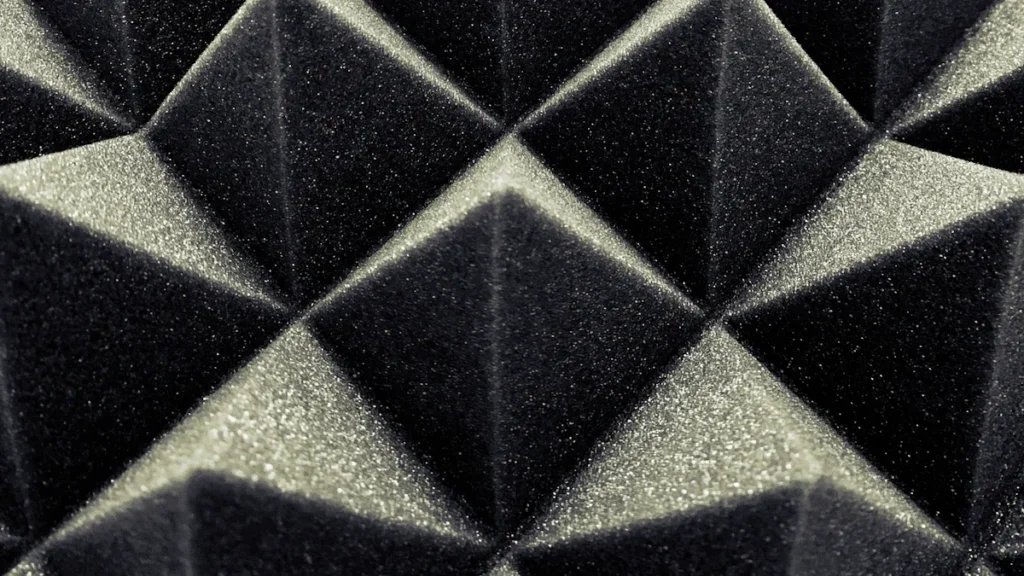
Shandong Panel International Trade Co., Ltd.
Eco-Friendly Features
You want to make a positive impact on the environment. Shandong Panel International Trade Co., Ltd. helps you achieve this goal. Their panels use renewable materials and meet strict green construction standards. You support sustainability every time you choose their products. The company follows innovation-driven and quality-first principles, so you get reliable solutions for your space.
| Feature | Description |
|---|---|
| Material | Selected environmentally friendly substrates |
| Sustainability | Made from renewable resources, meets green construction standards |
| Certifications | ISO certified processes, third-party audits |
| Sound Absorption | Controls reverberation and noise effectively |
Tip: You can trust Shandong Panel to deliver eco-friendly panels that look great and perform well.
Customization Options
You want panels that fit your vision. Shandong Panel gives you full control over design and function. You can select custom sizes, colors, and finishes. The company offers flexible collaboration models, so you can start with a small order or scale up for large projects. Their technical team works with you to match your exact requirements.
- Choose from polyester acoustic panels, WPC boards, film-faced plywood, and UV panels.
- Specify dimensions, colors, and packaging.
- Enjoy modern simplicity in surface finishes.
- Benefit from online technical assistance and a two-year warranty.
Performance and Use Cases
You expect top performance in every setting. Shandong Panel delivers excellent sound absorption, making your space quieter and more comfortable. Their panels suit high-end acoustic environments, including offices, studios, hotels, and commercial buildings. You get products that combine aesthetics and functionality.
| Feature | Details |
|---|---|
| Material Composition | PVC + Stone Composite |
| Thickness Options | 3.5mm, 4mm, 5mm, 6mm |
| Standard Size | 1220×183×4mm (custom sizes available) |
| Application | Offices, studios, hotels, commercial spaces |
| After-Sales Support | Online technical assistance |
You can rely on Shandong Panel for consistent quality and strong after-sales support. Their panels help you create a peaceful environment, whether you need privacy in a meeting room or better sound in a restaurant.
Ecophon Solo
Unique Features
You want flexibility and style. Ecophon Solo panels offer minimalist design and extensive customization. You can choose from different shapes and colors to match your space. The panels use high-density glass wool, which boosts sound absorption and keeps your environment safe with a non-combustible fire rating.
| Feature | Details |
|---|---|
| Design | Minimalist, flexible shapes and colors |
| Composition | High-density glass wool |
| Fire Rating | Non-combustible (EN ISO 1182) |
| Environmental Impact | Fully recyclable, Nordic Swan Eco Label |
Performance
You demand excellent sound control. Ecophon Solo delivers with an NRC rating of 0.95, which means you get outstanding noise reduction. The panels work well on ceilings and walls, and you can install them close to the ceiling if space is tight. You also benefit from vertical absorbers like Baffle Wave and Baffle ZigZag, which add style and function.
| Feature | Details |
|---|---|
| NRC Rating | 0.95 |
| Sizing | Ø800 x 40mm, Ø1200 x 40mm |
| Installation | Ceiling, wall, vertical absorbers |
Best Applications
You want panels that fit any project. Ecophon Solo works in new builds and renovations. You can use them in offices, schools, restaurants, and creative spaces. Architects love the design flexibility and the option to combine lighting with sound absorption. You get a solution that improves acoustics and enhances the look of your room.
| Use Case | Description |
|---|---|
| Design Flexibility | Ideal for new builds and refurbishments |
| Acoustic Performance | Enhances sound absorption in any space |
| Aesthetic Integration | Custom shapes and colors for creative projects |
| Combined Lighting | Integrates lighting for added functionality |
| Vertical Absorbers | Innovative shapes for modern environments |
| Close Installation | Fits spaces with height restrictions |
SilentSpace Rafts
Unique Features
You want a modern look with powerful sound control. SilentSpace Rafts offer floating acoustic solutions that create visual interest. You can choose from a variety of shapes and colors to match your style. The panels use advanced materials that absorb sound and add a decorative touch to your ceiling.
- Floating design creates a striking visual effect.
- Multiple shapes and colors available.
- Lightweight construction for easy installation.
Performance
You expect strong noise reduction. SilentSpace Rafts deliver high NRC ratings, often above 0.80. You get clear conversations and less echo in busy environments. The panels work well in open offices, restaurants, and public spaces where you need both style and function.
| Feature | Details |
|---|---|
| NRC Rating | 0.80+ |
| Installation | Suspended from ceiling |
| Material | Advanced sound-absorbing substrates |
Best Applications
You want versatility. SilentSpace Rafts fit open-plan offices, hospitality venues, and educational facilities. You can use them to define zones, improve privacy, and create a welcoming atmosphere. The panels help you achieve both acoustic comfort and modern design.
| Application | Description |
|---|---|
| Open Offices | Reduces noise, improves focus |
| Restaurants | Enhances ambiance, lowers stress |
| Schools | Supports learning with better sound quality |
| Hospitality Spaces | Adds style and comfort |
Note: You can combine SilentSpace Rafts with other panels for a layered acoustic solution.
Autex Quietspace
Unique Features
You want a solution that combines sustainability, performance, and design flexibility. Autex Quietspace panels deliver all three. You get panels made from 100% polyester fiber (PET), which means they are safe, non-toxic, and fully recyclable. You can choose from two thicknesses—25 mm and 50 mm—so you can target the exact level of sound absorption you need. The panels come in a generous size of 1220 mm x 2440 mm, making them ideal for covering large wall or ceiling areas quickly.
| Feature | Details |
|---|---|
| NRC | 0.85, 1.00 |
| Composition | 100% polyester fibre (PET) |
| Size | 1220 mm x 2440 mm |
| Thickness | 25 mm, 50 mm |
| Product Placement | Ceiling, Wall |
| Form | Panel |
| Install method | Direct fixed or suspended |
| Application | Commercial/Office Space, Hospitality, Theatres and Auditoriums, Recording Studios and Radio |
You can install these panels directly or suspend them for a floating effect. You also get a wide range of color options, so you can match your brand or interior style.
Performance
You expect top-tier sound absorption. Autex Quietspace panels deliver NRC ratings of 0.85 to 1.00, which means you get excellent control over echo and reverberation. You can use them in demanding environments like theaters, studios, and open offices. The panels maintain their performance over time, so you enjoy lasting results.
Tip: Choose the 50 mm thickness for maximum sound absorption in challenging spaces.
Best Applications
You want versatility. Autex Quietspace panels work in many settings, from busy offices to creative studios. You can use them in restaurants, cafes, and conference rooms to create a calm, focused atmosphere.
| Project Type | Benefits |
|---|---|
| Open Office | Reduces sound reverberation, enhancing focus and concentration among employees. |
| Restaurants and Cafes | Absorbs sound effectively while adding artistic flair, creating a relaxing dining experience. |
| Conference Rooms | Ensures clear communication and provides a sophisticated backdrop for discussions. |
You can trust these panels to deliver both function and style, no matter where you install them.
Owens Corning 703
Unique Features
You want a proven industry standard. Owens Corning 703 panels set the benchmark for professional sound control. You get rigid fiberglass boards that are lightweight, easy to handle, and highly effective. These panels fit perfectly in home theaters, recording studios, and commercial spaces. You can cut and wrap them in fabric to match your décor.
- Rigid fiberglass construction for durability
- Lightweight and easy to install
- Customizable with fabric wraps
Performance
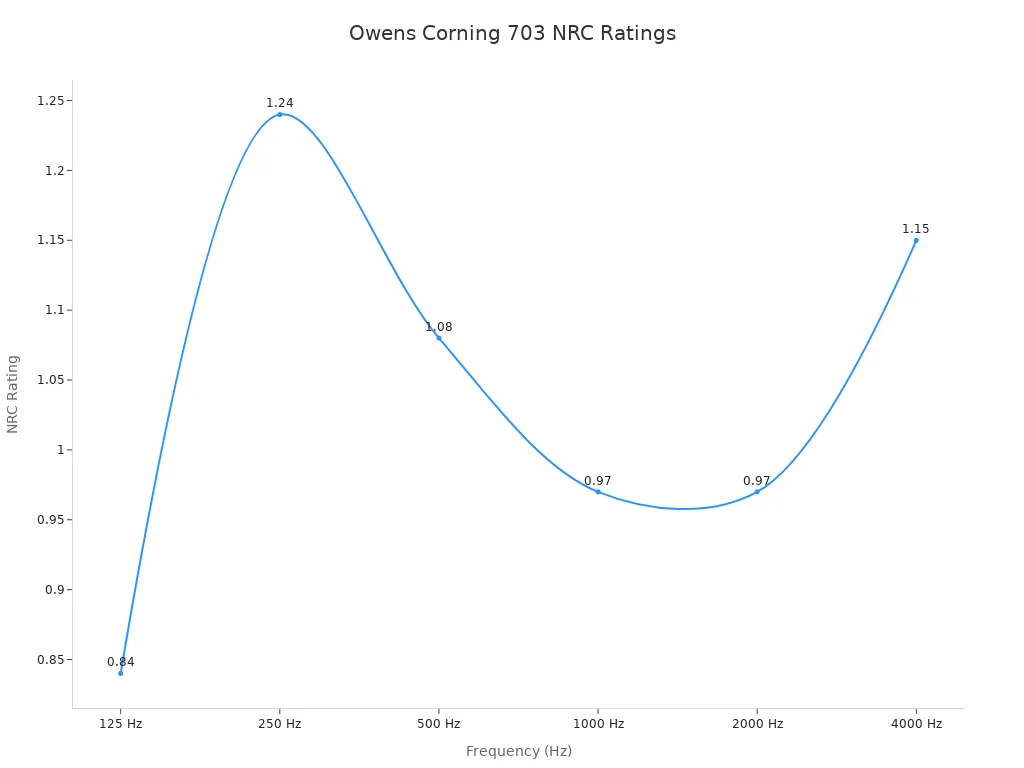
You demand reliable results. Owens Corning 703 panels deliver outstanding sound absorption across a wide frequency range. The NRC values range from 0.84 to 1.24, depending on the frequency, so you get consistent performance in any environment.
| Frequency (Hz) | 125 | 250 | 500 | 1000 | 2000 | 4000 |
|---|---|---|---|---|---|---|
| NRC | 0.84 | 1.24 | 1.08 | 0.97 | 0.97 | 1.15 |
You also benefit from competitive pricing and volume discounts, making these panels a cost-effective choice for large projects. Many professionals rely on Owens Corning 703 for its consistent quality and performance.
Best Applications
You want a panel that adapts to your needs. Owens Corning 703 excels in recording studios, home theaters, and any space where you need precise sound control. You can use them for wall and ceiling treatments, bass traps, and vocal booths.
- Recording studios: Achieve professional-grade sound clarity.
- Home theaters: Enjoy immersive audio without unwanted echoes.
- Commercial spaces: Improve speech intelligibility and privacy.
You get a trusted solution that delivers results every time.
DIY Acoustic Panels
Materials and Cost
You want to save money and customize your space. DIY acoustic panels let you do both. You can choose from several materials, each with its own benefits and price range.
| Material | Pros | Cons | Price Range |
|---|---|---|---|
| Rockwool (Mineral Wool) | Excellent sound absorption, fire-resistant | Slightly more expensive, requires gloves | $0.50–$1.50/sq ft |
| Fiberglass Insulation | Great absorption, budget-friendly | Can irritate skin and lungs | $0.40–$1.00/sq ft |
| Acoustic Foam | Lightweight, easy to cut and install | Lower absorption at low frequencies | $1.00–$3.00/sq ft |
| Cotton Batting | Eco-friendly, safe to handle | Less effective than mineral options | $0.80–$2.00/sq ft |
| Denim Insulation | Recycled material, no itching | Moderate absorption, harder to find locally | $1.00–$2.50/sq ft |
You can build a panel by constructing a wooden frame, filling it with your chosen material, and covering it with fabric. This method gives you full control over size, thickness, and appearance.
Performance
You want results that rival commercial products. DIY panels can deliver impressive sound absorption, especially when you use high-quality materials like Rockwool or fiberglass. You can tailor the thickness and density to match your room’s needs. Many audio professionals recommend DIY panels for their cost-effectiveness and flexibility.
Note: DIY panels often perform as well as many commercial options if you follow best practices in construction.
When to Choose DIY
You want flexibility and savings. DIY panels are perfect if you have a tight budget, need custom sizes, or enjoy hands-on projects. You can install them at your own pace and adjust the design as your needs change.
- Choose DIY if you want to cover large areas affordably.
- Opt for DIY when you need panels in unique shapes or colors.
- Select DIY if you want to experiment with different materials and finishes.
You gain complete control over your acoustic environment without breaking the bank.
How to Choose an Acoustic Panel
NRC Ratings Explained
You want the best sound control for your space. Start by understanding NRC ratings. NRC stands for Noise Reduction Coefficient. This rating tells you how well a material absorbs sound. Testing happens in a special chamber, using international standards like ISO 354 and ASTM C423. The NRC value is the average sound absorption at four key frequencies: 250 Hz, 500 Hz, 1000 Hz, and 2000 Hz.
A higher NRC means better sound absorption. For example, a panel with an NRC of 0.90 absorbs 90% of sound, making your room much quieter. Use the table below to see what different NRC ratings mean for your project:
| NRC Rating | Effect on Sound |
|---|---|
| 0.00–0.20 | Reflective — most sound bounces back into space |
| 0.30–0.60 | Moderate — some echo reduction, improved comfort |
| 0.70–1.00 | High — effective absorption, improved clarity |
Tip: Choose panels with NRC ratings above 0.70 for offices, studios, or classrooms where clear sound matters.
Materials and Build Quality
You want panels that last and perform well. The material and build quality make a big difference. Polyester acoustic panels offer superior sound absorption. They are lightweight, versatile, and add style to your space. Traditional acoustic panels provide good soundproofing and are budget-friendly. Bonded acoustical cotton panels give you high performance and are 100% recyclable.
| Material Type | Sound Absorption Effectiveness | Additional Benefits |
|---|---|---|
| Polyester Acoustic Panels | Superior sound absorption | Lightweight, versatile, aesthetic enhancement |
| Traditional Acoustic Panels | Decent soundproofing | Budget-friendly, easy installation, proven effectiveness |
| Bonded Acoustical Cotton Panels | High-performance absorption | 100% recyclable, Class A fire rated |
- Polyester panels: Great for modern spaces and eco-conscious buyers.
- Traditional panels: Good for basic needs and tight budgets.
- Cotton panels: Best for green building projects.
Note: High build quality means better durability and consistent performance. Always check for certifications and fire ratings.
Thickness and Size
You want the right panel for your room’s needs. Thickness and size affect how well a panel absorbs sound. Thicker panels (3 inches or more) absorb low frequencies, like bass. These work best in studios or music rooms. Thinner panels (1-2 inches) target higher frequencies, such as voices or high-pitched sounds. Use these in conference rooms or offices.
- Thicker panels = better bass absorption.
- Thinner panels = better for speech and treble.
- Large panels cover more area and control sound more effectively.
Choose the thickness based on your room’s main sound problems. For deep bass, go thick. For general noise, thinner panels may be enough.
Matching Room and Purpose
You want the right solution for your space. Every room has unique sound challenges. You need to match the panel type to your room’s size and purpose for the best results. Use the table below to guide your choice:
| Panel Type | Purpose | Placement Strategy |
|---|---|---|
| Absorptive Panels | Reduce echoes and reverberation | Cover 20-30% of wall surface area |
| Diffusive Panels | Scatter sound waves to prevent echoes | Place strategically for optimal performance |
| Bass Traps | Absorb low-frequency sounds, ideal for corners | Place in corners of rooms like studios |
You can use absorptive panels in offices or classrooms to make speech clearer. Diffusive panels work well in music rooms or home theaters where you want a lively but controlled sound. Bass traps are perfect for studios or media rooms with deep bass problems.
Think about your goals. Do you want privacy in a meeting room? Choose absorptive panels. Do you want balanced sound for music? Add diffusive panels. For powerful bass, install bass traps in the corners. You create the best environment when you match the panel to your needs.
Tip: Walk around your room and listen for echoes or “boomy” spots. This helps you decide which panel type to use and where to place it.
Balancing Budget and Style
You want great sound and a beautiful space without overspending. Start by planning your budget. Include the cost of materials, brand, and how much coverage you need. Do not forget extra expenses like mounting hardware and installation fees. If you have a large project, look for trade programs or bulk discounts.
Follow these steps to get the most value:
- Consider the total cost, including installation, maintenance, and how long your panels will last.
- Place high-performance panels where they matter most. You do not need to cover every wall.
- Work with an acoustics consultant if possible. They can help you find cost-effective options that still look great.
You can choose panels with stylish finishes or custom colors to match your décor. Many brands offer decorative options that blend with your design. You do not have to sacrifice style for performance.
Note: A smart acoustic panel strategy saves money and creates a space you love.
Acoustic Panel Installation and Care
Buying Tips
You want to make a smart investment for your space. Start by identifying your goals. Do you need to reduce echoes, block outside noise, or create a private area? Define your acoustic needs before you shop. Next, look at the type of panel. Foam, fabric-wrapped, diffusers, and bass traps each serve different purposes. Choose the right type for your environment.
Check the material. High-quality materials like mineral wool, polyester, or acoustic foam absorb sound better. Review the NRC rating. A higher NRC means better sound absorption, which is vital for studios or conference rooms. Consider thickness and density. Thicker and denser panels work best in challenging spaces.
Think about style. Pick panels that match your room’s design. You can find panels in many colors, shapes, and finishes. Also, consider installation. Some panels are easy to mount yourself, while others may need professional help. Always check for certifications and fire ratings to ensure safety and quality.
Tip: Make a checklist of your needs before you buy. This helps you compare options and choose the best panel for your space.
Installation Basics
You can install panels yourself with a few simple steps. First, plan your layout. Decide where you want to place each panel for the best results. Clean and dry the wall surface. This step ensures the panels stick well and last longer.
Measure your wall and mark where each panel will go. Cut panels to size if needed. Choose your mounting method. Use adhesive for a quick install or clips and screws for a more secure hold. Start in one corner and work across the wall. Press each panel firmly into place.
Finish by adding trim or caulking any gaps. Wipe the panels clean to remove dust or fingerprints. You do not need special tools—just a tape measure, level, pencil, and your chosen mounting hardware.
Placement Strategies
You want the best performance from your panels. Start by identifying the main sound sources in your room. Place panels at the first reflection points, such as side walls or ceilings near speakers. Spread panels evenly for a balanced sound.
Calculate how many panels you need. Multiply your room’s cubic volume by 3% to find the right coverage. Leave a small air gap (about 2 inches) between the panel and the wall for even better absorption. This simple trick boosts performance without extra cost.
Note: Walk around your room and listen for echoes. Adjust panel placement until you hear a clear, comfortable sound.
Maintenance and Cleaning
You want your acoustic panels to last and perform at their best. Regular care keeps them looking fresh and working efficiently. Follow these steps to extend the lifespan of your panels:
- Regular Cleaning
Dust your panels every month. Use a vacuum cleaner with a soft brush attachment for fabric surfaces. This simple routine prevents dust buildup, which can reduce sound absorption. - Spot Cleaning
If you notice stains, gently clean the area with a mild detergent solution and a soft cloth. Avoid soaking the panel. For tough stains, consider professional cleaning services. - Inspection and Repair
Check your panels often for signs of wear, mold, or damage. Early repairs stop small problems from becoming big ones. If you see loose edges or tears, fix them right away. - Monitor Humidity Levels
Keep your panels in rooms with stable humidity. High moisture can damage materials and encourage mold. Use a dehumidifier if needed. - Protective Measures
Install panels away from direct sunlight and moisture sources. Sunlight can fade colors, and moisture can weaken the material. In busy areas, use barriers or fabric protectors to guard against stains.
Tip: A simple cleaning routine and regular inspections help you maintain both the appearance and performance of your panels.
Common Mistakes
You want to avoid costly errors when installing acoustic panels. Many people make the same mistakes, but you can sidestep them with a little planning. Here’s a quick guide to the most common pitfalls and how to fix them:
| Mistake | Solution |
|---|---|
| Not selecting appropriate panels | Evaluate your room’s sound challenges and choose panels that match those needs. |
| Incorrect placement of panels | Focus on primary reflection points, such as walls opposite speakers, instead of covering every wall. |
| Failing to securely install panels | Use the right mounting hardware and techniques for safety and performance. |
| Prioritizing aesthetics over function | Balance visual appeal with acoustic effectiveness. |
| Over-treatment of the room | Start with a moderate amount of paneling. Test the acoustics before adding more. |
| Not testing and adjusting | After installation, test the sound and adjust panel placement for the best results. |
Note: You get the best results when you plan your installation, choose the right panels, and test your space after setup.
You can create a comfortable, quiet environment by following these tips. Proper care and smart installation choices help you enjoy the full benefits of your acoustic panel investment.
You have many outstanding choices for 2025. Shandong Panel International Trade Co., Ltd. stands out for eco-friendly materials, effective noise reduction, and a wide range of woodgrain finishes that suit any style. You also benefit from recyclable products and natural textures that create a tranquil atmosphere. When you select an acoustic panel, focus on NRC ratings, material quality, and design trends that blend function with style.
For your next step, assess your space, compare top brands, and prepare for easy installation with the right tools.
FAQ
What is an acoustic panel and how does it work?
You use an acoustic panel to absorb sound waves. The panel reduces echoes and noise in your space. You get a quieter, more comfortable environment for work, study, or relaxation.
How do I choose the right acoustic panel for my room?
You start by measuring your space. Check the NRC rating for sound absorption. Pick a panel that matches your style and needs. You get better results when you focus on both performance and design.
Can I install acoustic panels myself?
You can install most acoustic panels without professional help. Use adhesive, screws, or mounting clips. Follow the manufacturer’s instructions. You save money and time with a simple DIY approach.
Are acoustic panels eco-friendly?
You find many acoustic panels made from recycled or renewable materials. Brands like Shandong Panel International Trade Co., Ltd. offer sustainable options. You support a greener future when you choose eco-friendly panels.
How do I clean and maintain my acoustic panels?
You dust panels regularly with a soft brush or vacuum. Spot clean stains with mild detergent. Avoid soaking the material. You keep your panels looking new and performing well with simple care.
Do acoustic panels improve privacy in offices?
You increase privacy by installing acoustic panels. The panels absorb sound and prevent noise from traveling between rooms. You create a more focused and confidential workspace.
What is the difference between absorptive and diffusive acoustic panels?
You use absorptive panels to reduce echoes and control noise. Diffusive panels scatter sound waves for balanced acoustics. You combine both types for optimal sound quality in studios or large rooms.
Let’s Keep in Touch!

Thanks for reading—I’m glad you joined me on this journey!
If you found this content valuable, insightful, or thought-provoking, I’d love to hear your thoughts.
📘 Follow me on Facebook for exclusive tips, behind-the-scenes insights, and community discussions.
👉 Click here to connect
Feel free to share your feedback or questions in the comments or on social media—I’m always here to chat.
Let’s keep exploring, learning, and growing—together!